

That soft spot in your floor or the musty scent of mold isn’t a sign to scrap your investment; it’s a signal to change your selling strategy. You might feel stuck with a liability, especially when a full roof replacement can cost $15,000 in 2026. If you’re wondering who buys rvs with water damage for a fair price, you aren’t alone. Most traditional dealers will lowball you or refuse damaged units entirely, leaving you to deal with health risks and declining value.
We understand the anxiety of facing repair quotes that exceed what the camper is actually worth. You want to get rid of the liability quickly without the headache of private showings or expensive renovations. This guide shows you how to secure a profitable, stress-free sale for your Class A motorhome, travel trailer, or Fifth Wheel. You’ll learn how to bypass the lowball offers and find professional buyers who value your vehicle’s potential. We’ll cover 2026 market trends and the fastest way to turn your water-damaged RV into immediate liquidity.
Key Takeaways
- Identify the hidden progression of water rot to determine if your unit is suffering from cosmetic issues or structural delamination.
- Avoid the frustration of lowball offers by learning why retail dealers and private buyers are terrified of damaged inventory.
- Use the “Iceberg Effect” formula to calculate the true cost of repairs before you waste money on a renovation that won’t pay off.
- Compare your selling options to find exactly who buys rvs with water damage for immediate cash without requiring you to lift a finger for repairs.
- Streamline your exit strategy by offloading the liability of a Fifth Wheel or Motorhome while a professional team handles all the title and DMV logistics.
The Reality of Water Damage: From Minor Leaks to Major Structural Rot
Water damage in a Recreational vehicle (RV) is rarely a localized issue. While a wet carpet might seem like a simple cleanup task, moisture acts as a silent catalyst for structural decay. In the RV industry, water damage refers to any intrusion that compromises the integrity of the walls, flooring, or roof systems. A single unsealed seam on the roof can allow water to seep into the lamination layers. Over time, this causes delamination, where the exterior fiberglass skin separates from the internal wood substrate. By the time you notice a bubble on your exterior wall, the internal rot has likely been active for months.
Identifying these issues early is critical. Look for hidden indicators like soft spots under your feet or a persistent musty odor that doesn’t go away with cleaning. Bubbling exterior fiberglass or interior wallboard that feels spongy are red flags that the damage is deep. In 2026, buyers are more cautious than ever. With used RV values for Class A motorhomes averaging over $207,000 as of March 2026, shoppers perform rigorous inspections to avoid mold and structural failures. If you find yourself holding a unit with these problems, you need to know who buys rvs with water damage without demanding you pay for the repairs first.
Common Types of RV Water Damage
Roof and ceiling leaks are the most frequent culprits. A small crack in the lap sealant can allow gallons of water to enter the ceiling cavity during a single storm. Window and slide-out seal failures are equally dangerous because they often go unnoticed for years. Water trickles down inside the wall cavity, rotting the studs from the inside out. Plumbing leaks under cabinets or near the water heater can rot floors from the bottom up. As of early 2026, even minor sealant repairs can cost between $150 and $600 per incident. Major roof replacements can exceed $15,000, making the decision to sell as-is much more logical.
The Health and Safety Risks of Neglected Leaks
Neglected leaks create significant liability. Black mold, specifically Stachybotrys, can develop in damp wall cavities, posing serious health risks to occupants and tanking your resale value. One owner reported a $4,200 repair bill just for a leak that caused subfloor mold and wood rot. Beyond health, structural integrity is a major concern. When the wood frame or subflooring rots, the vehicle can no longer safely support its own weight. Electrical hazards also emerge when water enters wiring harnesses or breaker panels. This creates short circuits and fire risks. Knowing who buys rvs with water damage allows you to transfer this liability to professional buyers who specialize in safe remediation.
Why Traditional RV Dealers and Private Buyers Reject Damaged Units
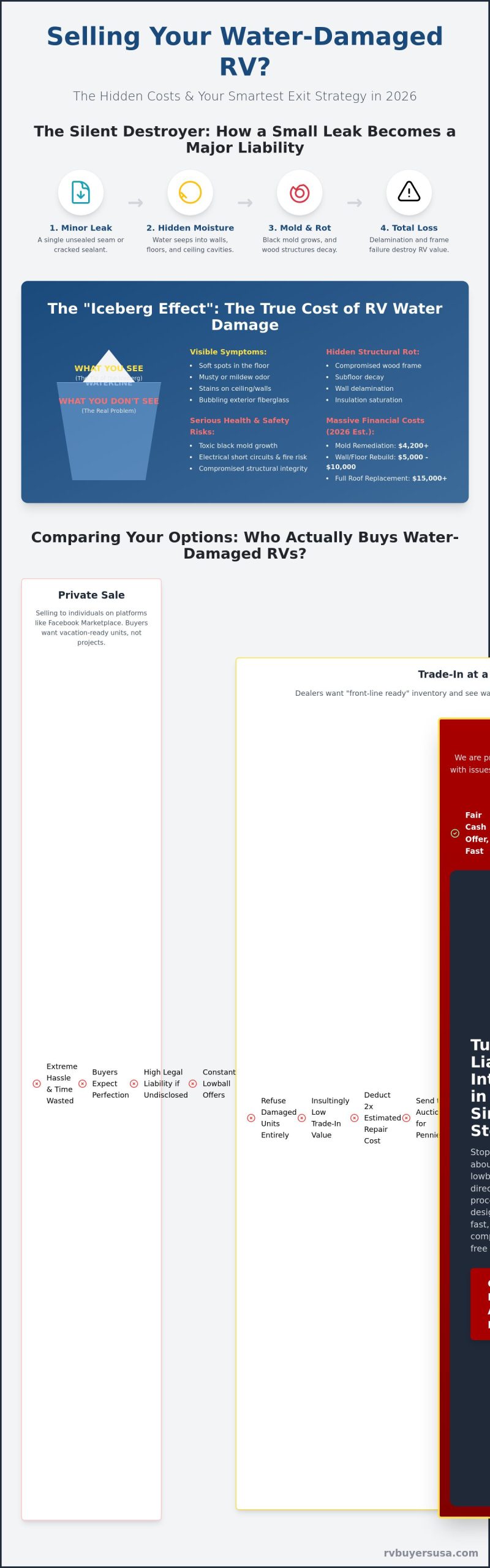
Retail dealers want “front-line ready” inventory. Water damage is a liability they can’t easily flip. If they find rot during a trade-in appraisal, the offer often plummets to near zero. This happens because dealers must provide warranties to the next buyer. They can’t risk the legal or financial fallout if a “repaired” leak returns six months later. Their business model is built on speed and reliability, and a water-damaged unit represents a slow, expensive bottleneck in their service department.
Private buyers on platforms like Facebook Marketplace or RV Trader are usually looking for a vacation-ready unit. They aren’t equipped to handle a “project” camper. When they see a vehicle history report or notice a soft spot in the floor, they walk away immediately. This leaves you dealing with “tire kickers” who use minor damage as a lever to slash your price. You end up wasting weekends showing your RV to people who have no intention of paying a fair price once they smell a hint of mildew.
The Dealer Deduction Math
Dealers calculate repair costs at professional shop rates, which often exceed $150 per hour in 2026. They also add a hefty risk premium to every quote. If they estimate $5,000 in damage, they might deduct $10,000 from your trade-in value to cover what they might find once they tear into the walls. Most retail lots won’t even bother fixing major rot; they simply send these units to wholesale auctions where they sell for a fraction of their book value. This is why their initial offers feel like an insult to your intelligence.
The Liability of Private Sales
Selling privately carries significant legal weight. If you fail to disclose mold or structural rot, a buyer could potentially sue you for damages or health issues later. It’s a high-stress process involving strangers coming to your home to inspect your property. If you want to skip the legal risks and the lowball offers, consider a professional who buys rvs with water damage for a fair, as-is price. This removes the burden of disclosure from your shoulders and puts the risk on the professional buyer instead.
Financing is often the biggest hurdle in the retail market. Most banks and credit unions refuse to issue loans for RVs with known structural integrity issues or major water intrusion. Since the average used Class A motorhome or Fifth Wheel is a high-ticket item, most buyers need a loan to close the deal. When the bank says no, your sale falls through, leaving you stuck with a depreciating asset. Professional acquisition specialists solve this by paying cash, removing the bank from the equation entirely and providing you with immediate liquidity.
Fixing Water Damage vs. Selling As-Is: A Financial Feasibility Study
Deciding whether to restore your camper or cut your losses requires a cold, hard look at the numbers. Industry experts often refer to the “Iceberg Effect” when discussing water intrusion. The damage you see on the surface is typically just 50% of the actual problem. If a repair shop quotes you $5,000 to fix a soft spot in the floor, prepare for the final bill to exceed $7,500 once they peel back the linoleum and discover rotted joists. This financial unpredictability is a primary reason owners look for who buys rvs with water damage for a flat cash price instead of gambling on a restoration.
Calculating your Return on Investment (ROI) is the next step. For older units, specifically those over 10 years old, major structural repairs rarely pay off. If you spend $10,000 on a new roof and wall lamination for a travel trailer worth $20,000, you aren’t increasing the value to $30,000. You’re simply trying to reach the original market price. Factor in the rising RV maintenance costs and the risk of a “Salvage” title, and the math quickly turns against the seller. A branded title can slash your resale value by up to 50%, regardless of how well the repairs were performed.
When It Makes Sense to Repair
Repairing is usually only viable for late-model Class A motorhomes where the damage is isolated. If you’ve caught a seal failure early and the intrusion is cosmetic, a professional fix can protect your equity. Focus on projects where the total repair bill stays under 10% of the RV’s current market value. If the damage involves the chassis, main frame, or heavy mold growth in the insulation, the “fix-it” window has likely closed.
The Benefits of an Immediate Cash Sale
Selling as-is stops the financial bleeding immediately. You eliminate ongoing storage fees, insurance premiums, and the constant stress of worsening rot. You avoid the “repair trap” where fixing one leak reveals three more hidden issues in the plumbing or electrical systems. Choosing immediate liquidity beats a 6-month repair timeline every time. By offloading the unit now, you free up capital for a newer, reliable vehicle without the headache of managing a construction project in your driveway.
Comparing Your Options: Who Actually Buys Water-Damaged RVs?
Many sellers assume their only choice is the local junkyard once they discover rot. This is a mistake that leaves significant money on the table. Salvage yards and scrap dealers typically buy for the weight of the metal or specific salvaged parts. They pay pennies on the dollar for your asset. You might walk away with a few hundred dollars for a unit that still holds thousands in component value. While it’s a quick exit, it’s rarely the most profitable one.
Specialized RV flippers or renovators are another route. These are often individuals looking for a “project” camper. Their offers are notoriously inconsistent. They might back out at the last minute if their inspection reveals more rot than your photos showed. This creates a high-risk situation where you waste weeks with no guarantee of a closing. Charity donation is often suggested for its simplicity, but it results in the lowest financial return. Your tax deduction is based on the final auction price; if the unit sells for scrap, your deduction is minimal.
Direct cash buyers and national acquisition firms represent the professional middle ground. These companies have the capital to handle large-scale repairs and the logistics to move units across the country to high-demand markets like the Sun Belt. This scale allows them to offer fairer prices than a local scrapper. If you want a professional who buys rvs with water damage for immediate cash, this is your most reliable path to liquidity.
National Direct Buyers vs. Local Scrappers
National reach changes the financial math in your favor. A local junkyard only cares about the scrap value in your specific zip code. A national buyer evaluates the demand for Class A motorhomes, Fifth Wheels, or Toy Haulers across a much broader market. Professional firms provide free nationwide towing, which is essential if your unit isn’t roadworthy due to structural damage. Verify a buyer’s legitimacy by looking for a transparent process and a willingness to provide a firm offer before they dispatch a driver.
Red Flags to Watch Out For
Protect yourself from predatory buyers by staying alert for common red flags. Never accept a “vague” offer over the phone that isn’t backed by a written agreement. If a buyer won’t provide a firm price before arrival, they likely intend to pressure you once they’re standing in your driveway. Watch out for these warning signs:
- Requests for you to pay for an “appraisal” or “towing fee” out of pocket.
- Buyers who won’t explain the specific DMV and title transfer process.
- Pressure to sign over the title before you have the cash or certified funds in hand.
- Offers that seem too high to be true, often used as a “bait and switch” tactic.
A legitimate professional who buys rvs with water damage will cover all logistical costs and handle the administrative burdens for you. They shouldn’t ask for a dime from your pocket to complete the transaction.
Get Cash for Your Damaged RV: The RV Buyers USA Direct Purchase Process
Selling a unit with structural decay doesn’t have to be a nightmare. We built our business on an “As-Is” philosophy. This means we buy Class A, B, and C motorhomes, along with Fifth Wheels and Travel Trailers, regardless of their current state. You don’t need to scrub the mold or patch the roof. We specialize in taking on the liability that traditional dealers refuse to touch. If you’ve been searching for who buys rvs with water damage without the typical retail runaround, you’ve found the professional solution.
Our process eliminates the administrative burden that usually stalls private sales. We handle all the title work and DMV paperwork. This ensures a clean transition of ownership and protects you from future liability. You won’t have to spend hours at a government office or worry about whether the buyer properly registered the vehicle. We prioritize speed and simplicity so you can move on to your next adventure without the weight of a damaged asset holding you back.
Professional Appraisal and Fair Market Value
We don’t rely on guesswork. Our team uses real-time industry data to provide a competitive offer that reflects the true potential of your vehicle. When selling my rv, understanding the valuation process is key to getting a fair deal. We look past the cosmetic issues and focus on the underlying value of the chassis, engine, and high-value components. Our valuations are transparent and firm. There are no hidden fees or last-minute haggling when our driver arrives. You receive a clear offer based on the current 2026 market conditions.
Nationwide Pickup and Finalizing the Sale
Logistics shouldn’t be your problem. We offer nationwide pickup across the United States, meaning we come directly to your location. Whether your unit is parked at a storage facility or in your driveway, we coordinate the entire move. This is especially helpful for non-roadworthy units that require professional towing due to structural compromise. You get paid before the RV ever leaves your property. This immediate payment provides the liquidity you need to resolve any outstanding loans or simply clear the space. It’s the safest way to liquidate a damaged asset. You deal with a seasoned professional who buys rvs with water damage, ensuring a secure and streamlined transaction from start to finish.
Turn Your Damaged RV Into Immediate Cash
Water damage is a complex problem, but your exit strategy should be simple. We have explored how hidden rot and the “Iceberg Effect” of repair costs can quickly drain your bank account. In the 2026 market, trying to sell a “project” camper to retail dealers or private buyers often leads to frustration and lowball offers. Instead of waiting months for a repair shop or a buyer who won’t show up, choose a professional firm that understands the true value of your asset.
Since 2003, RV Buyers USA has provided decades of acquisition expertise to owners nationwide. We handle all the title and DMV paperwork so you don’t have to deal with administrative headaches. If you’re wondering who buys rvs with water damage for a fair price, we are ready to help. We offer free nationwide pickup for all motorhomes and trailers, ensuring your unit is removed safely from your property. Stop worrying about mold risks or declining values and get the liquidity you deserve today.
Get a Free Cash Offer for Your Damaged RV Today
Frequently Asked Questions
Can I sell an RV with black mold?
Yes, you can sell an RV with black mold, but you should target professional buyers who specialize in remediation. Most private buyers and retail dealers will reject the unit immediately due to health liabilities and the high cost of professional cleaning. A professional firm buys these units in “as-is” condition, allowing you to walk away without performing dangerous cleaning or expensive repairs yourself.
Will a dealer take a trade-in with known water damage?
Most retail dealers will either refuse a trade-in with water damage or offer a price far below market value. Dealers want inventory they can sell immediately. If your unit requires a $15,000 roof replacement, they’ll deduct that cost plus a risk premium from your trade-in offer. This often leaves owners with a near-zero valuation at a traditional dealership lot.
How much does it cost to fix a rotted RV floor?
Fixing a rotted RV floor is expensive, with costs often exceeding $5,000 for extensive labor. One owner reported a $4,200 bill for a leak that caused subfloor mold and wood rot as of 2026. Because these repairs involve stripping the interior and replacing the structural wood substrate, the final bill often surpasses the initial estimate once the technician opens the floorboards.
Do I have to disclose water damage when selling my RV privately?
You are legally required to disclose known water damage when selling an RV privately. Failing to mention structural rot or mold can lead to lawsuits for failure to disclose or fraud. Professional buyers simplify this process by purchasing the unit with full knowledge of its condition, removing the legal burden and the stress of potential future litigation from your shoulders.
Is a water-damaged RV considered a ‘total loss’ by insurance?
Insurance companies consider an RV a total loss if the repair costs exceed a specific percentage of its actual cash value. Since a new roof can cost upwards of $15,000 in 2026, many older units are totaled by insurers even after relatively minor incidents. If your insurance won’t cover the full restoration, selling the salvage to a professional buyer is often the best financial move.
Who offers the most money for a damaged Class A motorhome?
National acquisition firms typically offer the most money for a damaged Class A motorhome because they operate at a scale local buyers cannot match. These companies have the logistical power to transport and restore high-value units for resale in stronger markets. If you’re looking for who buys rvs with water damage for a fair price, a national firm provides the most consistent offers.
Can I sell an RV if the roof is leaking right now?
You can sell your RV even if the roof is currently leaking. You don’t need to patch the leak or tarp the unit before calling a professional buyer. They’ll handle the pickup and transportation regardless of the current weather conditions or the state of the roof. This allows you to stop the damage immediately without spending another dime on temporary fixes or storage.
How do I get a title for an RV that has been sitting with damage?
If your RV has been sitting and the title is lost or damaged, you must apply for a duplicate through your state’s DMV. Most states require a specific form and a small fee to issue a new certificate of ownership. Professional acquisition firms often guide you through this administrative process to ensure the title transfer is handled correctly and legally during the sale.