
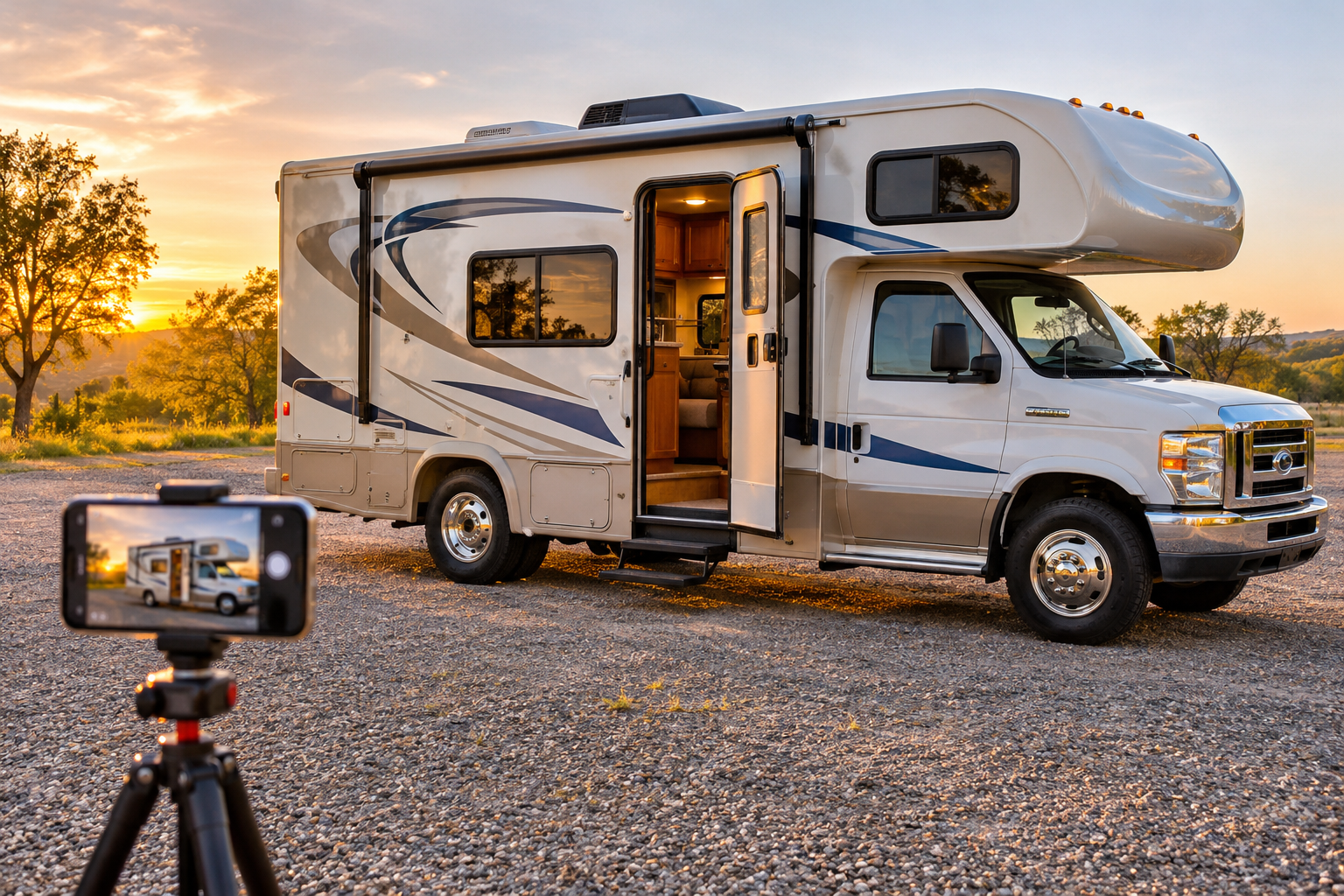
Two motorhomes can be nearly identical on paper. Same year, same class, same mileage, same asking price. One sells in a week. The other sits for two months. The difference is almost always the photos.
Buyers scroll fast. Your listing gets about one second to earn a click, and a dim, cluttered thumbnail loses that second every time. When you learn to photograph a motorhome for sale properly, you are not just making it look nice. You are filtering out the tire-kickers and pulling in the people ready to make a real offer.
Here is how to stage and shoot your rig so the photos do the selling for you.
Clean It Like a Buyer Is Coming Tomorrow
Staging starts with a deep clean, and a camera is more honest than your eyes. It sees the smudge on the window, the crumbs on the dinette, the film on the windshield. Everything you skip shows up on screen.
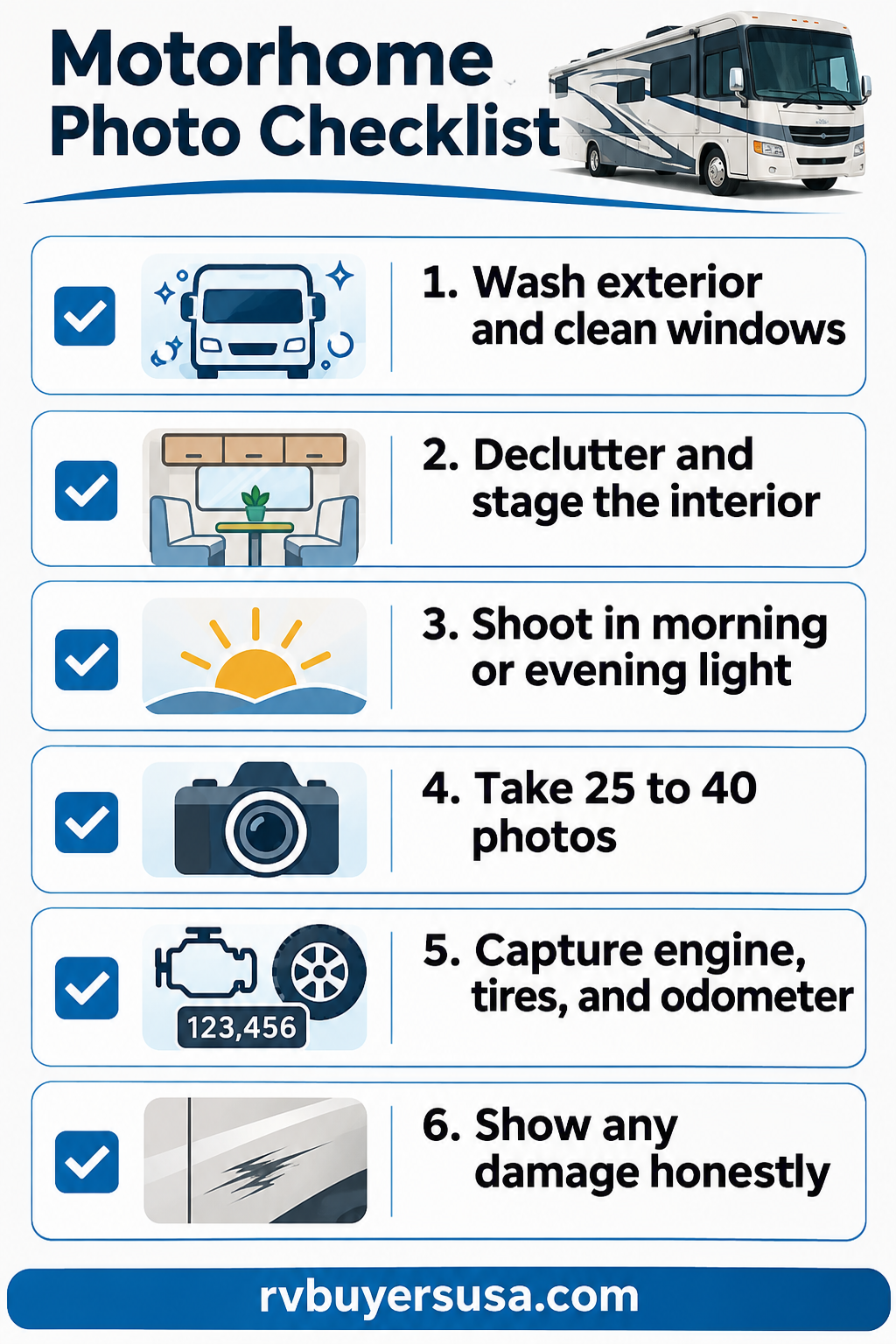
Start outside. Wash and dry the whole body, scrub the tires, and clean every window and the windshield until they are streak-free. A clean exterior reflects light and photographs bright instead of dull. Then move inside and treat it like a buyer is walking through in the morning.
Focus your cleaning where buyers judge hardest:
- The cab and dash, wiped down with no clutter on the seats
- The kitchen counters, sink, stovetop, and refrigerator
- The bathroom, especially the shower, toilet, and any water stains
- The floors, vacuumed and mopped so they look cared for
- The windows and skylights, since grime there darkens every interior shot
Pull out the personal stuff too. Photos of your family, loose gear, and half-used toiletries make it hard for a buyer to picture the motorhome as theirs. You want it to read as a clean, ready rig, not somebody’s lived-in weekend hauler.
Stage the Interior So It Feels Like a Home
Staging is not faking anything. It is showing the motorhome at its honest best. A made bed, a clear table, and open blinds turn a cramped-looking cabin into a space someone wants to travel in.
Open every blind and curtain and turn on the interior lights before you shoot. Natural light plus your own fixtures makes the inside look larger and warmer. Set the dinette like it is ready for coffee. Fluff the cushions, straighten the bedding, and stow anything that does not belong. If you have upgrades like a backup camera, solar, or new tires, stage those for their own close-ups because they are real selling points.
One more thing most sellers miss: shoot from the corners. Standing in a corner and shooting toward the opposite wall captures more of the room and makes tight motorhome interiors feel roomy and true to size.
Shoot in the Right Light at the Right Time
Light does more for your photos than any camera setting. The best time to photograph a motorhome is the golden hour, the first hour after sunrise or the last hour before sunset. That low, soft light wraps around the body and hides nothing while flattering everything.
Avoid high noon. Overhead sun blows out the roofline, throws hard shadows under the rig, and makes paint look flat. If a bright day is all you have, an overcast sky is actually your friend because the clouds act like a giant softbox and spread even light across the whole vehicle.
For the shots themselves, a few habits raise the quality fast:
- Hold the phone at eye level or slightly lower, not up high pointing down
- Keep the horizon straight and give the motorhome room in the frame
- Tap to focus and lock exposure so the shot is sharp and evenly lit
- Move around the rig and capture all four corners, not just the front three-quarter angle
You do not need a professional photographer. A recent smartphone, held steady in good light, produces listing photos that are more than good enough for a private sale.
Cover Every Angle Buyers Actually Want
Thin listings scare buyers. When a motorhome shows only four photos, people assume you are hiding something, and they scroll on. Give them 25 to 40 clear shots so they can inspect the rig from their couch and show up already sold.
Work through a full shot list so nothing gets missed:
- The full exterior from every side, plus the front and rear
- The cab, driver seat, and dashboard
- The living area, dinette, and any slide-outs open
- The kitchen and appliances
- The bathroom and shower
- The bedroom and storage
- The engine bay, tires, and odometer reading
- Any damage, wear, or needed repairs
Those last two matter more than they look. The odometer and engine shots prove condition on a motorized unit, and honest damage photos build trust. A buyer who sees the flaw in the listing and comes anyway is a serious buyer. One who discovers it during the walkthrough usually walks or lowballs you on the spot.
Write a Description That Matches the Photos
Great photos pull the click. The description closes the gap between interested and ready to talk. Lead with the facts a motorhome buyer searches for first: year, class, make and model, mileage, and engine type. Then tell the short, honest story of the rig, how it was used, what you upgraded, and why you are selling.
Skip the empty hype. “Great condition” means nothing on its own. “New tires in 2025, recent brakes, and a clean, dry interior with no soft spots” tells a buyer exactly what they are getting. Specifics sell. Vague praise gets ignored.
When You Would Rather Skip the Whole Production
Staging, shooting, editing, listing, and fielding messages is real work, and it can drag on for weeks with no guarantee of a serious buyer at the end. Not everyone wants that project, especially if you are selling because of a move, a health change, or an inherited motorhome you just need handled.
If that is you, there is a shortcut. A direct cash buyer values your motorhome on its actual condition, not on how glossy the listing looks, so a handful of honest phone photos are usually all it takes to get a fair number. RV Buyers USA buys Class A, B, and C motorhomes as-is across the contiguous 48 states, handles the title and DMV paperwork, and can even pay off an existing loan. No staging marathon required.
Frequently Asked Questions
What areas of the motorhome should I clean before taking photos?
Clean everything a buyer will judge in a photo: the exterior body and roofline, all windows inside and out, the windshield, the cab, the kitchen and bathroom, and the floors. Wipe down the dash and countertops, empty the trash, and remove personal items. A clean rig photographs brighter and signals that the motorhome was cared for.
What time of day takes the best motorhome photos?
Shoot in the first hour after sunrise or the last hour before sunset. That soft, low light flatters paint and avoids the harsh shadows and blown-out highlights you get at midday. Overcast days also work well because the clouds spread the light evenly across the whole vehicle.
How many photos should I include in a motorhome listing?
Aim for 25 to 40 clear photos. Cover the full exterior from every angle, the driver and living areas, the kitchen, the bathroom, the bedroom, the engine bay, the tires, and the odometer. Buyers trust listings with more real photos and skip past the ones with only three or four.
Should I hire a professional photographer to sell my motorhome?
For most private sales you do not need a pro. A recent smartphone in good light, held steady and shot at eye level, produces listing photos that are more than good enough. Spend your effort on cleaning and staging first, since that matters more than the camera.
Should I photograph damage on my motorhome?
Yes. Photograph any dents, water stains, worn tires, or interior wear clearly and describe them in the listing. Hidden problems come out during the inspection and kill deals or trigger a lower offer. Honest photos attract serious buyers and save you from wasted showings.
Do I need to photograph the motorhome if I sell to a direct buyer?
A few clear photos still help a direct buyer make a fast, accurate cash offer, but you can skip the deep staging. RV Buyers USA buys motorhomes as-is across the contiguous 48 states, so a handful of honest phone photos of the exterior, interior, engine, and odometer are usually enough to get a fair number.
Ready to skip the photo shoot entirely? Tell us about your motorhome using our quick form, and we will send a no-obligation cash offer within 24 hours based on current market data. If you like it, we come to you, handle the paperwork, and pay, usually within about two days.