
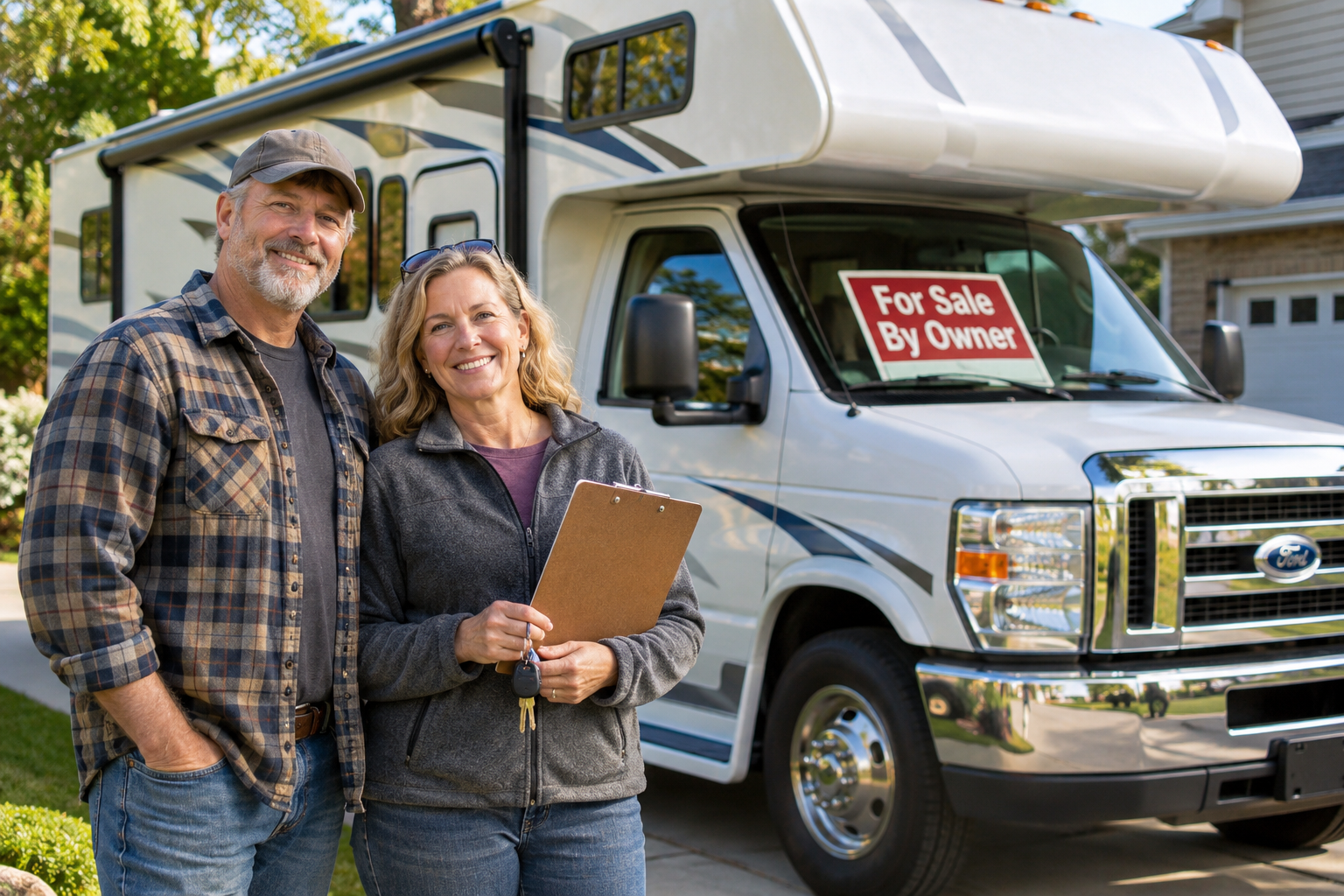
You’ve decided to skip the dealer and sell your motorhome yourself. Smart instinct, at least on paper. Cut out the middleman, keep more of the money, control the whole process. That’s the pitch, anyway.
Here’s what nobody tells you upfront. Selling a motorhome by owner is a part-time job with an unpredictable schedule and a few ways to lose real money if you get sloppy. Thousands of dollars can ride on how you handle a title, a payment, and a stranger who wants your keys. Do it right and you can come out ahead. Do it wrong and you’re the cautionary tale on an RV forum.
This is the process, start to finish, with the risky parts flagged so you don’t learn them the hard way.
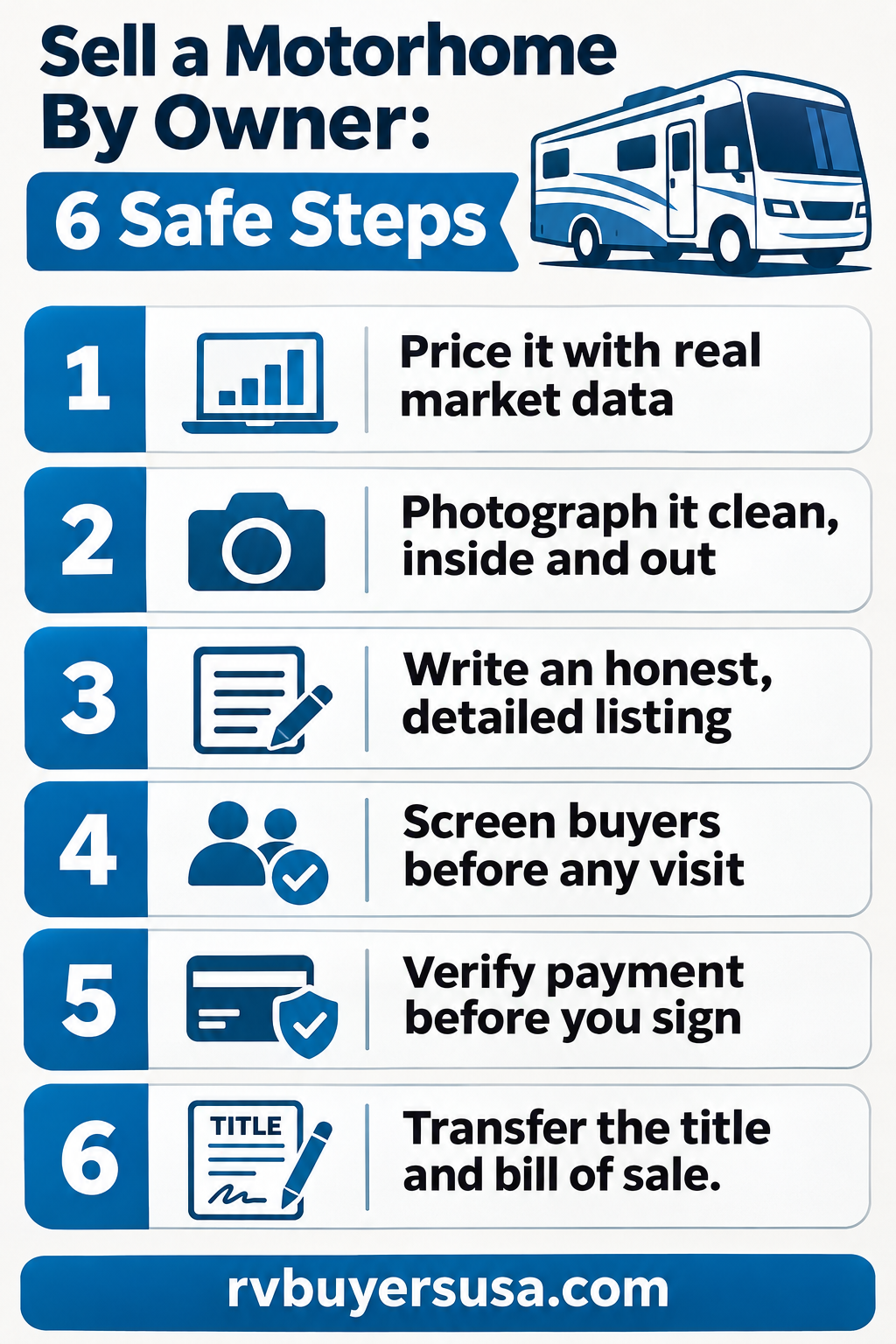
Price it before you fall in love with a number
The single biggest reason private motorhomes sit unsold for months is a price the seller picked emotionally. What you paid, what you still owe, what you spent on that awning last summer. Buyers don’t care about any of that. They care about what comparable units cost right now.
So do the homework. Pull up RV Trader and RV Universe, filter to your exact brand, model year, class, and rough mileage, and see what’s actually listed. Then price near the realistic middle of that range, not the top. If yours is cleaner or lower mileage than the pack, nudge up. If it needs work, be honest and price down. A fair number that moves in three weeks beats a fantasy number that sits for six months while you keep paying insurance and storage.
One more reality check. Motorhomes depreciate faster than most owners expect, and a unit that needs mechanical work loses value quickly in a private listing because buyers assume the worst. Know your floor before anyone makes an offer.
Photograph and describe it like you’d want to see it
Buyers scroll fast. Your photos decide whether they stop. Clean the motorhome inside and out first, then shoot in good daylight, not a dim garage. Get the exterior from several angles, the cab, the living area, the kitchen, the bathroom, the bed, the engine bay, and the odometer. Show the flaws too. A scuff you photograph honestly builds trust. A scuff you hide gets discovered on inspection and blows up the deal.
Then write a listing that answers questions before they’re asked. Year, make, model, class, mileage, engine, chassis, slide count, sleeping capacity, service history, and what’s new or recently replaced. Say why you’re selling. “Downsizing after the kids moved out” reads a lot better than a blank. The more complete your listing, the fewer time-wasting messages you’ll field.
Screen buyers before anyone comes to your driveway
This is where a private sale gets personal, and where it can get risky. You’re inviting strangers to your home to look at a vehicle worth tens of thousands of dollars. Treat that seriously.
Before you set a showing, ask a few qualifying questions by message or phone. Are they local or traveling in? Cash ready or still arranging financing? Have they owned a motorhome before? Serious buyers answer easily. Scammers and tire-kickers get vague or push to move off the platform fast. For the first meeting, pick a public spot like a store parking lot if you can, and don’t do showings alone.
Test drives deserve their own rule. Never hand your keys to someone for a solo drive. If a buyer is qualified and you’ve seen their license, ride along for a short, supervised loop. That’s it. RV owners who’ve been through this on forums say the same thing over and over: the test drive is the moment a motorhome gets stolen, so control it.
Get paid safely, then sign, in that order
Payment is where private sellers lose the most money, and it’s almost always avoidable. The rule is simple. Confirm the money is real and in your account before the title leaves your hand.
Cashier’s checks are faked constantly, and they look legitimate. Your bank can hand you the funds provisionally and then claw them back days later when the check bounces, long after the buyer has driven off in your motorhome. So don’t sign a title against a cashier’s check until your bank confirms it has actually cleared. Safer options: a bank wire you watch land in your account, or closing the deal together at the buyer’s bank where a teller verifies and issues the funds in front of you. Skip anything involving overpayment, third-party shippers, or a buyer you’ve never spoken to who’s “sending someone” to pick it up.
Handle the title, paperwork, and DMV
Once the money has cleared, the paperwork closes the sale. You’ll need the title in your name, a bill of sale, and in most states an odometer disclosure. The bill of sale should list both parties, the motorhome’s year, make, model, and VIN, the sale price, and the date, signed by both of you. Keep a copy.
Requirements vary by state, so check your DMV before closing. Some states want the title notarized. Some require a smog or emissions certificate. If you still owe money on the motorhome, the lender holds the title, which adds a step: you coordinate the loan payoff and the title release at the sale, often by meeting at the lender’s bank so the payoff and the handoff happen together. After the sale, remove the plates if your state requires it, cancel your insurance on the unit, and file any release-of-liability form your DMV offers so you’re not on the hook for what the new owner does.
When selling by owner isn’t worth it
Here’s the honest tradeoff. A private sale can earn you a higher sticker price than any quick-sale option. But it costs you real time and carries real risk, and for a lot of owners the math doesn’t favor it once you count the weeks of messages, the no-shows, the storage and insurance you keep paying while it sits, and the stress of vetting strangers.
That’s the gap a direct cash buyer fills. At RV Buyers USA we buy Class A, Class B, and Class C motorhomes outright, across the contiguous 48 states, and we come to you. No listings, no showings, no test-drive worries, no faked checks. You get a no-obligation cash offer within 24 hours, we handle the title, bill of sale, and DMV paperwork, we can pay off your existing loan, and we buy as-is so you don’t clean or fix a thing. Worth knowing: we buy motorized units only, model year 2016 and newer, and we don’t buy travel trailers, fifth wheels, or other towables.
Frequently Asked Questions
How do I sell my motorhome by owner safely?
Price it with real market data, screen every buyer before they visit, never hand over the title until payment has fully cleared, and meet in a public place for the first showing. The biggest risks in a private sale are fake payments and test-drive theft, so verify who you’re dealing with and confirm the money is real before anything leaves your hands.
What paperwork do I need to sell a motorhome myself?
You need the title in your name, a signed bill of sale with both parties’ information and the sale price, a lien release if you had a loan, and an odometer disclosure in most states. Some states also require a notarized signature or a smog or emissions form. Check your state DMV’s exact requirements before you close.
How does the title transfer work when selling a motorhome privately?
You sign the title over to the buyer once payment clears, fill in the sale price and odometer reading, and the buyer takes it to their DMV to register it in their name. If you still owe money, the lender holds the title, so you’ll coordinate the payoff and title release at the sale, often at the lender’s bank.
What’s the safest way to accept payment for a motorhome?
A bank wire that you confirm has landed in your account, or completing the sale together at the buyer’s bank so the funds are verified in person. Cashier’s checks are commonly faked, so never sign over a title against one until your bank confirms it has cleared, which can take days.
Should I let buyers take a test drive?
Only ride along, only after you’ve seen the buyer’s license, and only once they’ve shown they’re a serious buyer. Handing your keys to a stranger for a solo drive is how motorhomes get stolen. For a real buyer, a short supervised drive is reasonable and helps close the deal.
How do I price my motorhome to sell it fast?
Look at what comparable year, brand, and mileage units are actually listed for on RV Trader and RV Universe, then price near the realistic middle rather than the dream number. Overpricing is the top reason private motorhomes sit for months. Condition, mileage, and current demand move the number more than what you paid.
Is it worth selling a motorhome by owner or selling to a cash buyer?
A private sale can bring a higher sticker price, but it costs you months of listings, showings, tire-kickers, and paperwork, and it carries real scam risk. A direct cash buyer trades a bit of that top-dollar for speed and zero hassle. If your time, storage, or peace of mind matters, the cash route often nets out ahead.
Rather skip the whole process?
If reading all that made selling by owner sound like more than you signed up for, get a cash number first and decide from there. Tell us your motorhome’s year, class, and condition, and we’ll send a no-obligation cash offer within 24 hours. If you like it, we come to you, handle every piece of paperwork, and can close in about two days. Call RV Buyers USA at (619) 993-1439 or request your offer online today, then compare it against what a private sale would really cost you in time.