
Timing matters when you sell an RV. List at the right point in the year and you’re competing for buyers who are motivated, flush with budget, and ready to make a decision. List at the wrong point and you’re waiting for the phone to ring while storage fees tick up and the season passes you by.
The good news is that the seasonal pattern for RV sales is pretty consistent. Buyer demand moves in a predictable rhythm tied to camping season, and once you understand it, you can time your sale to work in your favor.
That said, the best time for a private listing isn’t always the best time for a cash offer, and the best time to sell on paper isn’t always the best time for your specific financial situation. This guide breaks all of that down so you can make a real decision, not just follow a generic rule.
The Spring Window: High Demand, High Competition
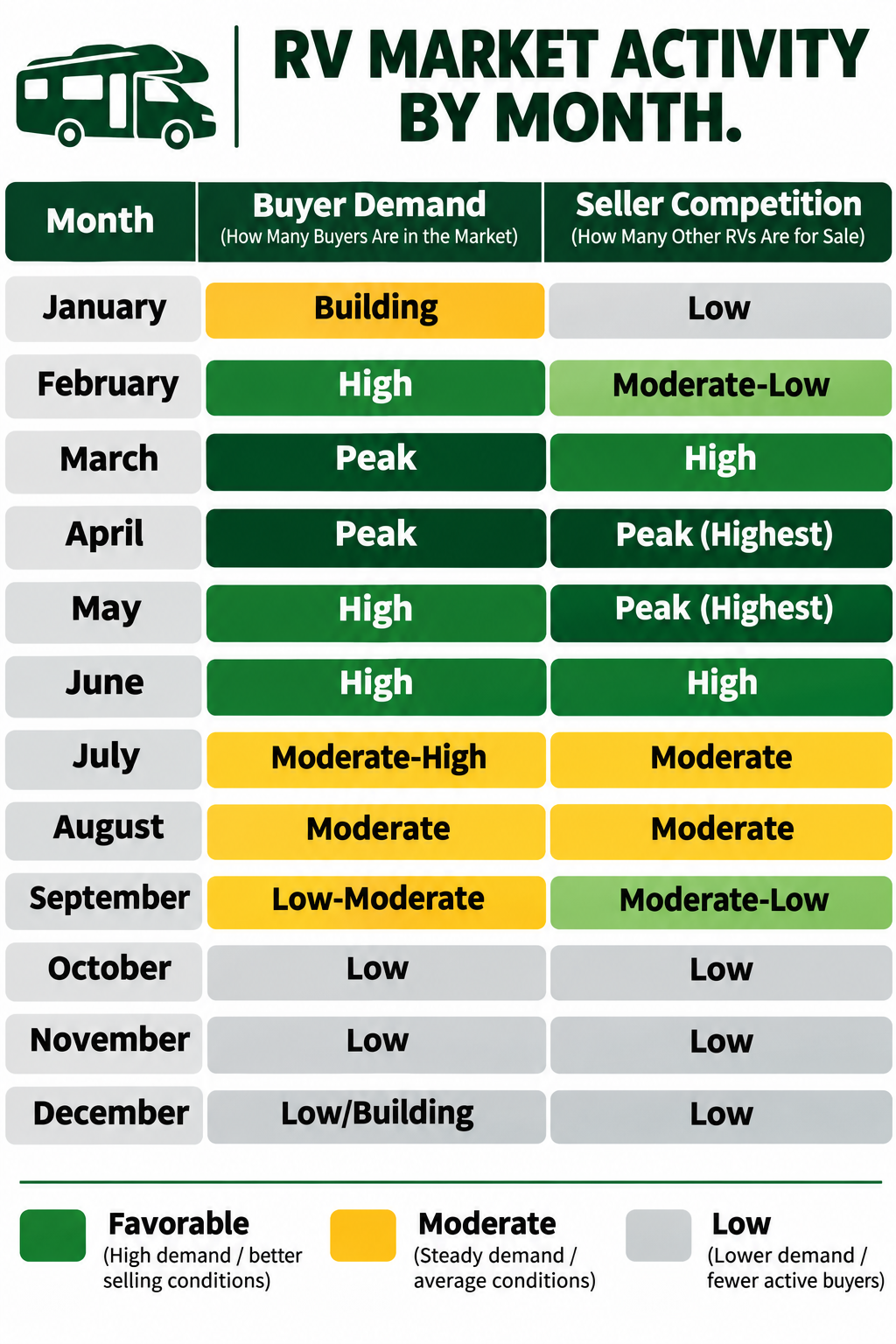
Spring is the most active period in the RV market, and February through April is consistently when buyer demand peaks. People are coming out of winter, planning their first trips of the year, and searching for units before the camping season starts. They’re motivated. They don’t want to miss the season. And they’re willing to act.
The flip side is that spring also brings more sellers into the market. Every RV owner who spent the winter deciding to sell lists in April. That surge in inventory means your listing competes against more options, which can slow things down or push buyers toward lower-priced alternatives.
The sweet spot for a private listing is late January through March. Buyer demand is building, but the flood of spring listings hasn’t hit yet. You’re a step ahead of the crowd, and buyers who are serious are already searching.
Summer: Sustained Demand With Less Urgency
Summer sales hold up well, particularly through July. Buyers who didn’t find what they wanted in spring are still in the market. Families making last-minute purchase decisions before a summer trip can be motivated and ready to close quickly.
After July, urgency fades. The camping season is winding down, and buyers who didn’t buy during peak season tend to wait for the next year rather than purchasing a unit they’ll only use for a few weeks. August and September listings often sit longer than spring or early summer listings at the same price.
Fall and Winter: Less Competition, Smaller Pool
Here’s the thing about fall and winter that most sellers don’t consider: fewer sellers means less competition for the buyers who are still looking. And there are always buyers still looking.
Late January is particularly interesting. New Year’s has passed. People have their budgets sorted. They’re already thinking about spring trips and shopping before units get snapped up. A well-priced listing in January can close faster than a spring listing that gets lost in a crowded market.
Winter is less ideal for private sales in cold climates, partly because RV showings are unpleasant when it’s 20 degrees and there’s snow on the ground. But for a cash buyer transaction, season matters much less. Cash buyers are purchasing year-round and don’t need to show the unit to an end buyer before they close.
What the 2025 and 2026 Market Means for Sellers
The RV market that peaked in 2021 and 2022 has normalized. Inventory is back. Buyers have options. That doesn’t mean selling is difficult — units in good condition at fair prices still move — but the extreme seller’s market of a few years ago is gone.
The RV Industry Association projected 330,000 to 362,000 new unit shipments for 2025, up from 2024 levels. More new inventory competing with your used unit means buyers in the mid-range segment have more choices than they did two or three years ago.
For sellers, this means condition and price matter more than they did during the boom. An overpriced listing or a unit with visible deferred maintenance will sit. A realistically priced, well-maintained unit in a segment with genuine demand will still sell.
The Calculation Most Sellers Miss
People spend a lot of energy optimizing for the best listing month. They spend less time doing the math on what waiting actually costs.
If you’re paying a $400 monthly loan payment on an RV you’re not using, plus $150 a month in storage fees, you’re spending $550 a month to hold the unit. Waiting three months for a better selling season costs you $1,650 before a single buyer shows up. If the seasonal difference in your sale price is $2,000, waiting barely breaks even — and that assumes the seasonal timing actually produces the higher number, which isn’t guaranteed.
For sellers carrying an active loan and storage costs, the right time to sell is often “as soon as you have a fair offer in hand.” A cash offer that closes next week stops the monthly bleed immediately. A private listing in April might get you a slightly higher price four months from now, but four months of carrying costs need to factor into that math.
Frequently Asked Questions
When is the best time of year to sell an RV?
Late January through April is generally the strongest window for sellers. Buyer demand picks up as people start planning spring and summer trips, and inventory from other sellers hasn’t flooded the market yet. Spring combines high buyer motivation with a buyer pool that’s ready to act before the season starts.
Should I wait for spring to sell my RV?
If you’re in a position to wait, spring timing can produce better results in a private sale. But if you’re paying monthly loan payments, storage fees, or insurance on an RV you’re not using, those ongoing costs can quickly outpace any seasonal price bump. For sellers with an active loan, getting a cash offer now and stopping the monthly bleed is often the smarter financial move.
Can I sell an RV in winter?
Yes, and it’s often underestimated as a selling window. Winter has fewer sellers, so your listing stands out more. Buyers who search in December and January tend to be serious — they’re planning ahead and ready to make a decision. Late winter listings can actually close faster than spring listings that get buried in a crowded market.
Does RV value change by season?
For private sales, yes — asking prices and what buyers will pay tend to be higher in spring and summer. For cash buyer offers, the seasonal variation is smaller because professional buyers are purchasing at wholesale-range prices year-round and aren’t as directly tied to retail market fluctuations.
Is the RV market good for sellers right now?
The RV Industry Association projects 330,000 to 362,000 new unit shipments for 2025, up from 2024 levels. More new inventory hitting the market means increased competition for used sellers, particularly in the mid-range segment. Sellers with well-maintained, fairly-priced units can still do well, but the tailwind that characterized the post-2020 seller’s market has eased.
If you’re not sure whether to wait or sell now, RV Buyers USA can help you think through the math. We’ll give you a no-obligation cash offer so you have a real number to compare against — and you can decide from there whether to take it, list privately, or hold. No pressure, just information.