
The Class A motorhome is the one that turns heads. Big, bold, a rolling apartment with a panoramic windshield. The Class C is the more modest cousin, built on a van or truck chassis with that signature cab-over bunk. Most buyers compare them on space and comfort. Far fewer compare them on the question that hits hardest the day you sell: which one holds its value?
The answer runs counter to what the showroom suggests. The pricier, more impressive Class A is usually the faster depreciator. The humbler Class C often clings to a larger share of what you paid. If you are deciding what to buy, or trying to set expectations for what your current rig is worth, that difference matters a lot.
Here is how Class A and Class C resale value actually stacks up, why the gap exists, and how to get the strongest price for whichever one sits in your driveway.
The Core Difference: Price In, Value Out
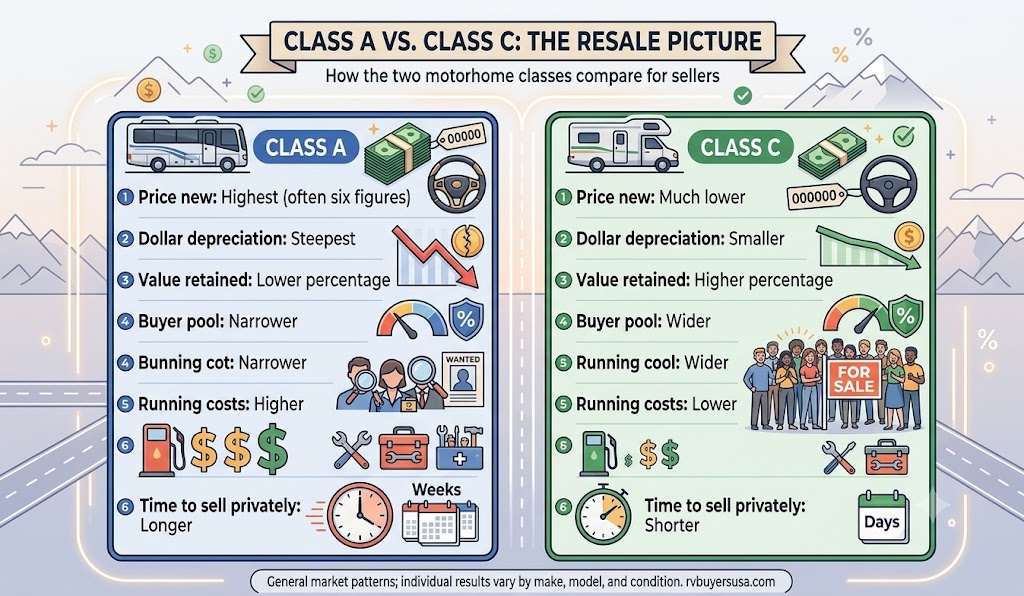
Start with what you pay. A new Class A motorhome, especially a diesel pusher, can run well into six figures. A new Class C typically costs a fraction of that. That price gap is the root of the resale story.
Depreciation tends to bite hardest in raw dollars on the most expensive units. A high sticker price has further to fall, and the early years of a Class A’s life can shed a large dollar amount fast. A Class C starts lower, so its dollar drop is smaller, and as a percentage of the original price it often loses less.
Think of it like two cars. A luxury flagship and a practical mid-size sedan can lose a similar percentage in theory, but the flagship’s percentage represents a much bigger pile of cash. With motorhomes, the Class C frequently wins on percentage retained too, not just dollars, because of where the used demand sits.
Why Class C Often Holds a Bigger Share
Resale value is about demand, and demand on the used market favors accessibility. A few things push Class C retention up.
- A wider buyer pool. Class C rigs appeal to first-time buyers, young families, and weekend travelers. More potential buyers means steadier demand and firmer prices.
- Easier financing. The lower price makes loans simpler to secure, which keeps the buyer pool from shrinking the way it does on a costly Class A.
- Lower running costs. Better fuel economy and cheaper maintenance make used Class C units attractive to budget-minded buyers.
- Manageable size. Plenty of buyers find a Class A intimidating to drive and park. The Class C feels approachable, widening its appeal on resale.
The Class A is not without its strengths on the used market. It just plays to a narrower, more demanding audience that weighs running costs, storage, and drivability harder, all of which can soften resale prices.
Where the Class A Fights Back
None of this means a Class A is a bad asset. It means you have to read the specifics. A few factors can keep a Class A’s value strong and even flip the script.
Diesel pushers are the clearest example. Built around engines made for the long haul, a well-maintained diesel Class A is genuinely desirable to serious full-timers and long-distance travelers. That demand supports resale value in a way a basic gas unit may not enjoy.
Brand and build quality matter too. Certain premium Class A makes have loyal followings, and their used units hold value because buyers seek them out by name. A respected nameplate, a sought-after floor plan, and a documented maintenance history can lift a Class A above the general depreciation curve.
So the honest comparison is not “Class C always wins.” It is that, all else equal, the Class C tends to retain a larger share of its price, while a Class A’s resale strength depends more heavily on getting the engine type, brand, and condition right.
How to Get the Best Price for Either One
Whichever class you own, the levers that protect resale value are the same, and they are mostly within your control.
- Keep and present your records. A documented maintenance history reassures buyers and supports a higher offer on both classes, but it matters even more on a pricier Class A.
- Handle the small stuff. Minor cosmetic and functional fixes keep a rig looking cared-for. Skip the expensive overhauls that rarely pay back.
- Know your number before you list. Get a market-based valuation so you are not guessing. Pricing on emotion or original cost is how rigs sit unsold.
- Do not let depreciation run while you wait. Both classes keep losing value every month. If you plan to sell, the calendar is working against you.
That last point is the one sellers feel most. Depreciation does not pause while you decide. The most reliable way to capture fair value on a Class A or a Class C is to get a current cash offer and act on it, rather than watch the rig slide in worth through another season.
Frequently Asked Questions
Which holds value better, a Class A or Class C motorhome?
Class C motorhomes tend to hold a higher percentage of their value than Class A motorhomes. Class A units cost much more new and depreciate faster in raw dollars, while Class C rigs are cheaper, more practical for many buyers, and stay in steadier demand on the used market.
Why do Class A motorhomes depreciate so fast?
Class A motorhomes carry high sticker prices, complex systems, and large engines, so the dollar drop in their first years is steep. Their buyer pool on the used market is also smaller because of running costs and size, which adds pressure to resale prices compared to more accessible Class C units.
Does a diesel Class A hold value better than a gas one?
Often, yes. Diesel pushers are built for long engine life and are sought after by serious buyers, so a well-maintained diesel Class A can hold value better than a comparable gas model. Maintenance history and condition still drive the final number more than fuel type alone.
Is a Class C motorhome easier to sell than a Class A?
Usually. Class C motorhomes appeal to a wider range of buyers, including first-timers and families, and their lower price makes financing easier to get. That broader demand often means a faster private sale than a large, pricier Class A, which can sit longer on the market.
How can I get the best price for my Class A or Class C?
Keep maintenance records, address small issues, and get a market-based valuation before you sell. The fastest way to capture fair value on either class is a direct cash buyer like RV Buyers USA, who prices on current market data and closes in about two days instead of months.
Does depreciation matter if I am selling now?
Yes, because depreciation is ongoing. Whether you own a Class A or Class C, every month you wait to sell, the value keeps sliding. If you already plan to sell, acting sooner usually nets more than holding the rig while it continues to lose value.
Know What Your Motorhome Is Worth Today
Class A or Class C, the number that counts is what your rig will fetch right now. Get a free, no-obligation cash offer from RV Buyers USA and find out, based on current market data, not guesswork. The appraisal takes about two minutes, your offer arrives within 24 hours, and if you accept, they come to your location anywhere in the contiguous 48 states and handle all the paperwork. Request your free RV appraisal today and lock in fair value before depreciation takes another bite.