
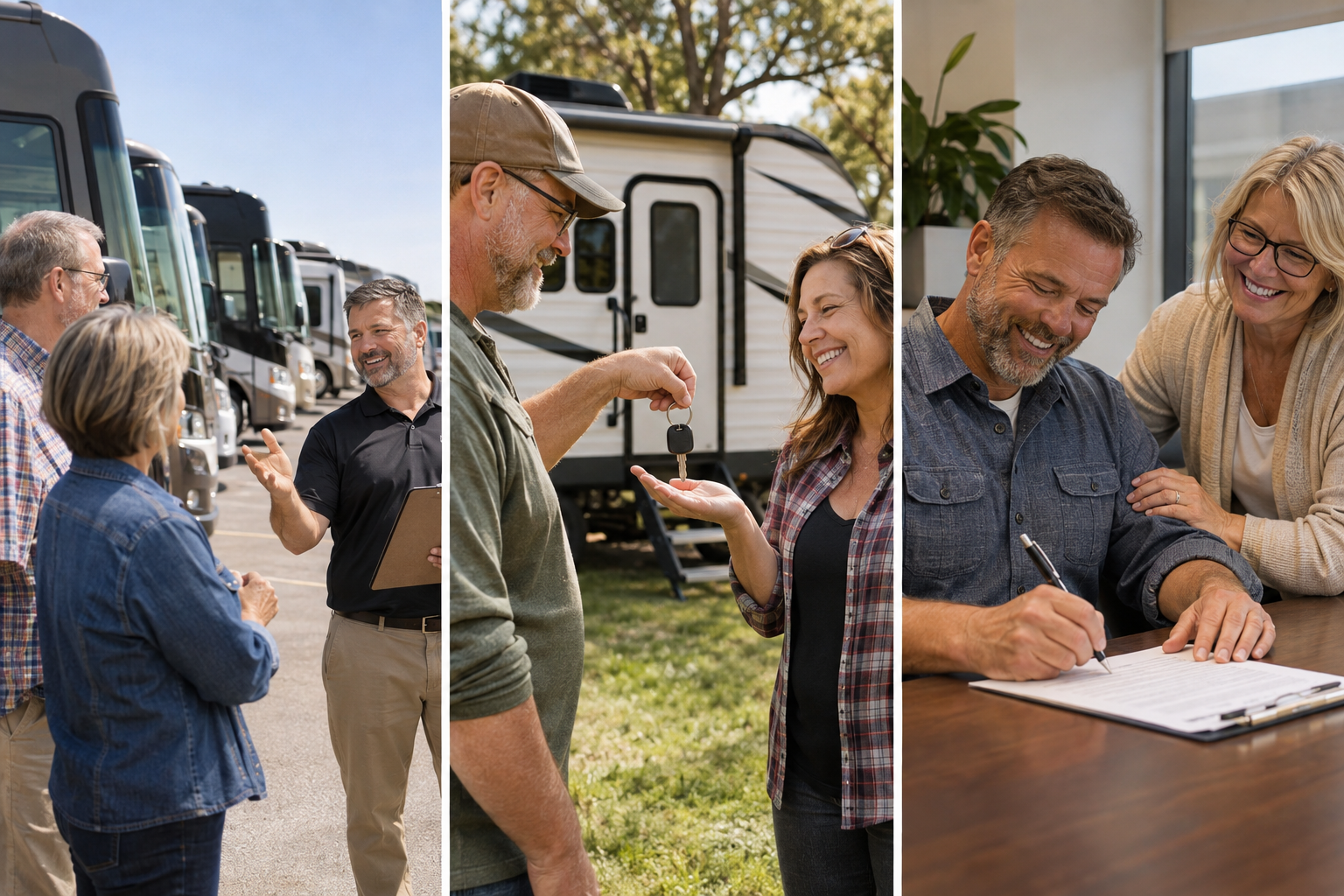
When you decide to sell your RV, you’re immediately faced with three directions you can go: trade it in at a dealership, sell it to a cash buyer, or list it yourself and find a private buyer. Every one of those options has people who swear by it. Every one also has stories about how it went sideways.
The problem with most comparisons you’ll find online is that they’re written by someone with a stake in one answer. Dealerships push trade-ins. Cash buyer companies push cash buyers. This post is going to be different. All three options have a real place depending on your situation, and the right one depends on what you’re actually trying to accomplish.
Let’s go through each one honestly.
The Trade-In: Fastest, But the Lowest Number
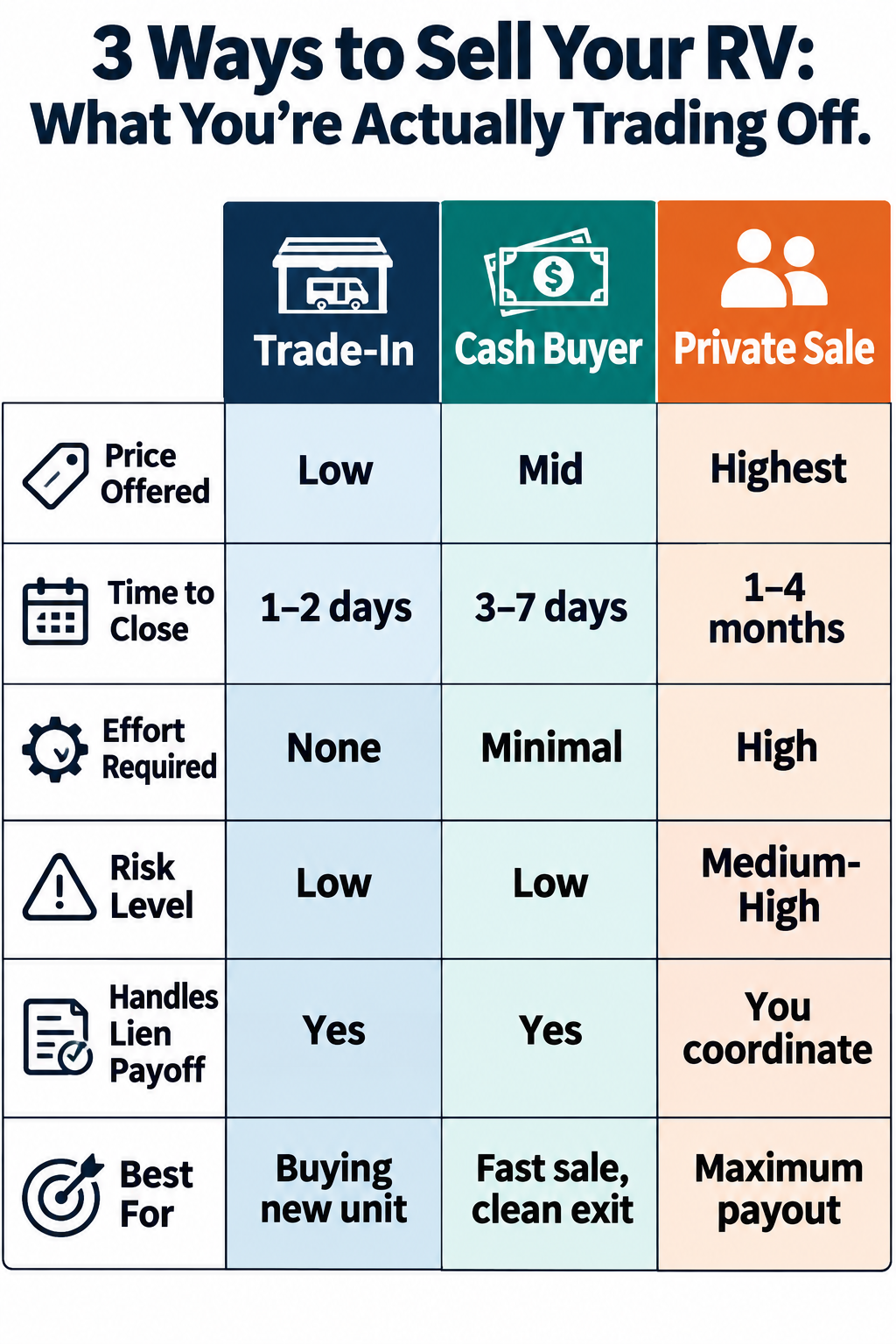
Trading your RV in at a dealership is the simplest transaction you can make. You bring the unit in, they appraise it, you get an offer, and if you’re buying a new unit you roll the value into the deal. If you’re just selling outright, they cut you a check.
The convenience is real. One stop, no listing, no showings, no back-and-forth with strangers. The dealer handles all the paperwork. If there’s a loan on the unit, they typically coordinate the payoff directly with your lender. The whole thing can be done in an afternoon.
The trade-off is the price. Dealerships are in the business of reselling at a profit. They have to account for reconditioning costs, lot fees, salesperson commission, and their own margin. A unit they buy from you for $22,000 might list on their lot for $32,000. That spread is how they stay in business. Your trade-in offer will reflect that math.
As a rough estimate, expect a dealership to offer 20 to 40 percent below what you’d get selling to a private buyer directly. The actual number depends on the make, model, condition, and how actively the dealer is buying that type of unit right now.
Trade-ins make the most sense when you’re buying a new unit from that same dealer and the combined deal makes financial sense. As a standalone sale, the numbers rarely work in your favor.
The Private Sale: Best Price, Most Work
If you want the most money for your RV, a private sale is where that happens. You’re selling directly to the person who will actually use the unit, cutting out any middlemen, and capturing the full retail value that a dealer would otherwise pocket.
The reality of getting there is less glamorous. You’ll need to write a detailed listing with good photos. You’ll field inquiries from buyers who aren’t serious, people who ask questions and never respond again, and lowball offers from people who’ve been burned by overpriced listings. You’ll schedule showings. Some won’t show up. Some will show up, spend an hour looking at everything, and then say they’ll think about it.
When a serious buyer does appear, you’ll negotiate. Then comes inspection — many serious buyers want a pre-purchase inspection from an RV technician, which can reveal issues that reopen the price conversation. If there’s a loan on the unit, you have to coordinate the payoff with your lender while simultaneously closing with a buyer who may not understand why they can’t just get the title today.
And then there’s payment risk. Fake cashier’s checks are a real problem in private RV sales. One common scam involves a buyer sending a check for more than the purchase price and asking you to wire back the difference. The check bounces days later. Never release the title until you have confirmed, cleared funds in your account.
Private sales typically take one to four months. That’s time the RV is sitting, storage fees are accruing, and you’re managing the process. If you have time, patience, and a desirable unit in good condition, the higher price can absolutely be worth it. If you need the thing gone, this route can wear on you.
The Cash Buyer: Speed and Certainty at a Price
A cash buyer company buys RVs directly from owners, typically at wholesale-to-retail range prices, with a fast close and minimal paperwork on your end. Think of it as the middle option between a dealer trade-in and a private sale.
Cash buyers will generally offer more than a dealer trade-in because they don’t have the same overhead structure. They’re not running a retail lot with salespeople and reconditioning bays. But they’ll offer less than what you could get from the right private buyer, because they’re buying volume and need margin to operate.
The advantages are concrete. The sale closes in days, not months. There’s no coordinating with strangers. Payment is guaranteed — you don’t have to worry about a check bouncing or a buyer backing out after inspection. If the unit has a loan on it, experienced cash buyers handle the lien payoff directly. They’ve done it hundreds of times and know how the process works.
Cash buyers also tend to buy units in a wider range of conditions than private buyers expect. Someone shopping on Facebook Marketplace usually wants a turn-key unit. A cash buyer can often make an offer on an older unit, a unit with mechanical issues, or one that needs cosmetic work.
So Which Option Is Right for You?
There’s no universal answer. The right choice depends on three things: how much time you have, how much work you want to put in, and how much price difference actually matters to your financial situation.
If you’re trading up and buying a new unit, the dealership trade-in is worth getting a number on — and negotiating hard against it with competing offers.
If you need the RV sold within a week and want a guaranteed outcome with no variables, a cash buyer is hard to beat.
If you have two to four months of runway, the unit is in great condition, and you’re comfortable managing the process, a private sale will likely get you the best price.
The smartest move is to get numbers from more than one source before you commit. Get a cash buyer offer. Check what comparables are listed for privately. If you’re trading in, get the trade-in offer in writing before you start negotiating on the new unit. Numbers in hand give you real leverage regardless of which path you choose.
Frequently Asked Questions
How much less will a dealer give me compared to a private sale?
Dealers typically offer 20 to 40 percent below what you could get in a private sale. Their offer has to leave room for reconditioning costs, lot overhead, sales commission, and a profit margin when they resell the unit. That said, the convenience of a single transaction with no showings or negotiations has real value if your time matters.
Is selling to a cash buyer worth it?
It depends on what you’re optimizing for. If speed and certainty matter more than squeezing out the last dollar, a cash buyer is often the best option. You get a guaranteed close, no need to vet private buyers, no risk of a deal falling through at the last minute, and no coordinating paperwork with strangers. The offer will be below private-sale retail, but the transaction is clean and fast.
How long does it take to sell an RV privately?
Private RV sales typically take one to four months, sometimes longer depending on your price, the time of year, and your local market. You’ll deal with inquiries from buyers who aren’t serious, showings that don’t convert, and offers that fall apart after negotiation. It’s not unusual for a seller to go through the process two or three times before a sale actually closes.
What are the risks of selling an RV to a private buyer?
The main risks include payment fraud (fake cashier’s checks that don’t clear), buyers who back out after inspections, and deals that require you to release the title before you actually have confirmed funds. If you sell to a private buyer, always confirm that payment has fully cleared before signing over the title. A wire transfer to your bank account or cash in hand is safer than a check.
Can I sell my RV fast without losing too much money?
The fastest sale with the best price usually comes from a cash buyer who operates in your market and has demand for your type of unit. You won’t get private-sale retail, but you’ll get a fair offer and close in days rather than weeks or months. Pricing your RV sharply for a private listing can speed things up, but it also means accepting less than asking.
Want to know what a cash offer on your specific unit looks like? RV Buyers USA makes competitive offers across the Midwest with no pressure and no obligation. Reach out with your RV’s year, make, model, and condition and we’ll get you a number — usually within 24 hours.