
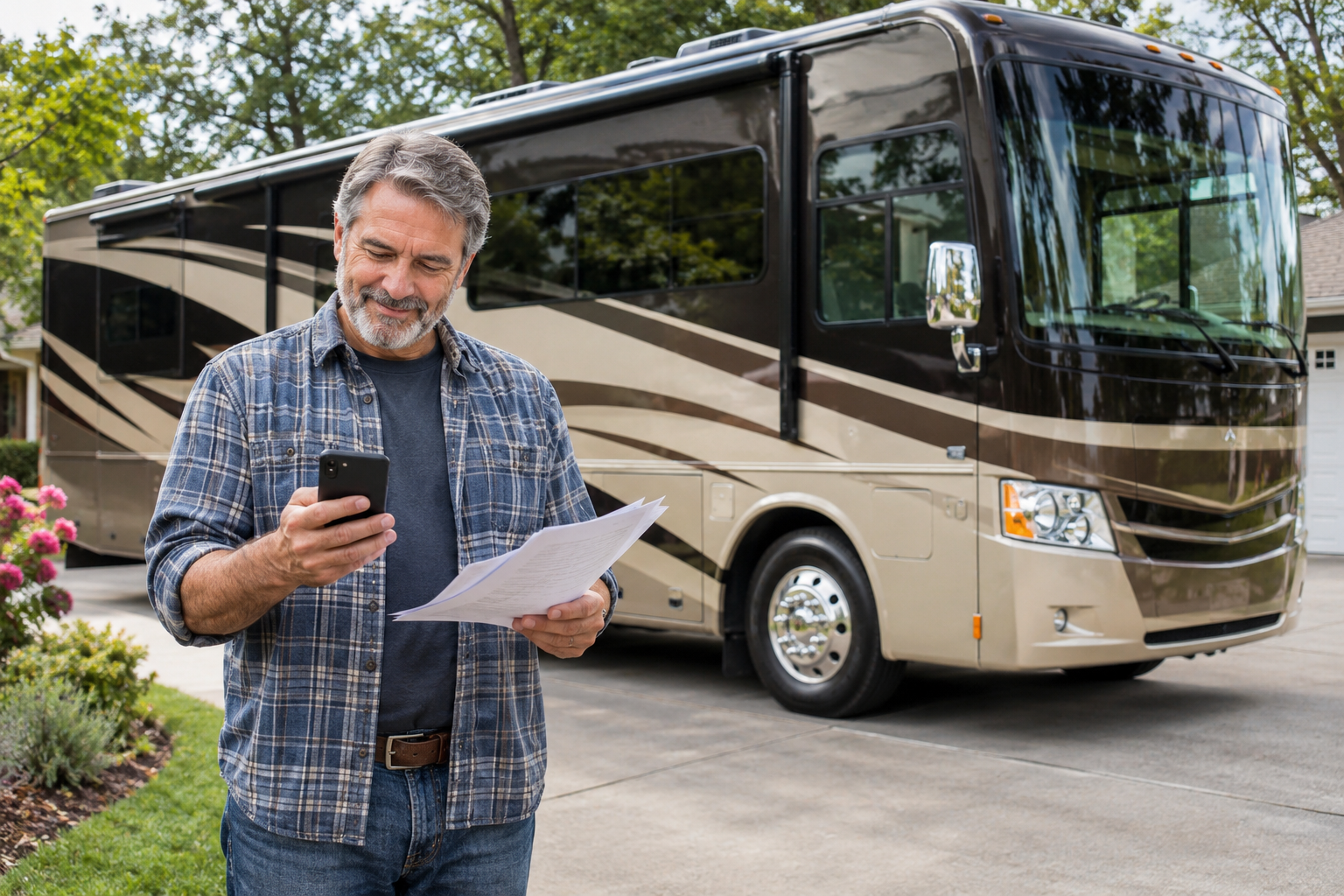
You list your motorhome, feel good about the price, and then the first message lands. The offer is thousands below asking, with a paragraph about everything supposedly wrong with your rig. Your stomach drops. Is your price wrong, or is this buyer just fishing?
Usually it is the second one. Lowball offers are a standard opening move, not a verdict on your motorhome. Spend an hour reading how RV owners talk about selling on forums like iRV2 and the RV Forum, and you will see the same story over and over: the buyer starts low, the seller reacts, and the one who stays calm usually wins.
Learning to negotiate a motorhome sale price is really about staying steady when someone tries to rattle you. Here is how to do it, and how to skip the whole dance if you would rather.
Know Your Real Number Before Anyone Makes an Offer
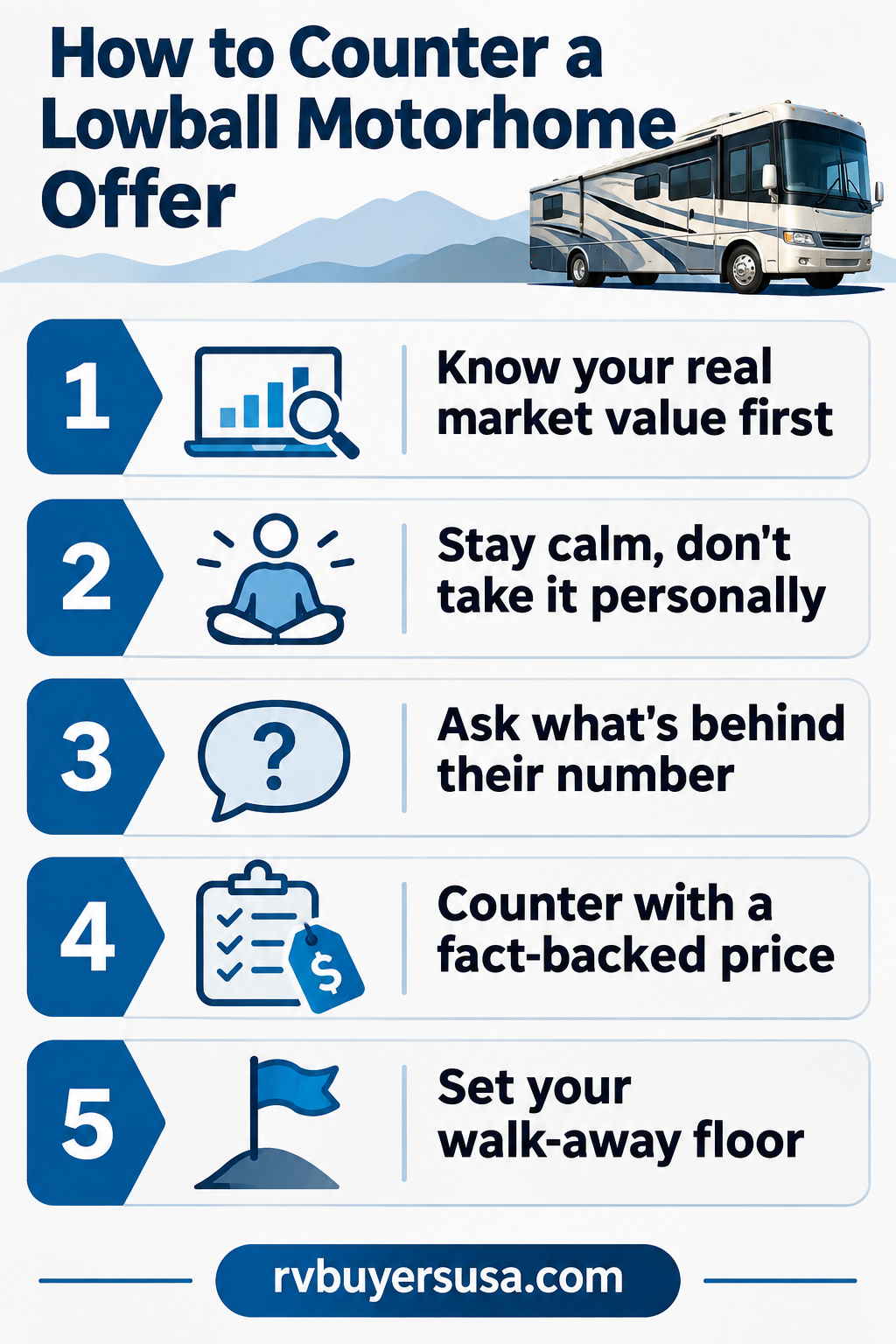
You cannot negotiate from a position of strength if you are guessing at your own value. Before you list, research what comparable motorhomes actually sold for, not just what other sellers are asking. Same class, similar year, mileage, and condition. Note how long those units sat before selling, because a rig that moves in a week and one that lingers for three months tell different stories about price.
Once you know your true market value, set an asking price with a small cushion. Slightly above your target gives you room to come down without dipping below what the motorhome is worth. Just do not stretch it. Overprice the rig and serious buyers filter it out of their search before they ever contact you, and then you are negotiating with no one.
Recognize the Tactics So They Do Not Work on You
Buyers who negotiate often run the same plays. None of them are personal. They are just pressure tactics, and they lose their power the moment you name them.
Watch for these common moves:
- The flaw parade. The buyer lists every scratch, worn tire, and dated feature to justify a lower price.
- The phantom alternative. They mention another motorhome, cheaper, that they are “also looking at.”
- The fast-cash discount. They wave immediate payment in exchange for a steep price cut.
- The silent treatment. They go quiet after an offer, betting you will cave and drop your number first.
The counter to all of them is the same. Do not react emotionally, and do not rush. A calm reply that points back to your evidence deflates the pressure. When you know the tactic, it stops being a threat and becomes just noise.
How to Counter a Lowball Without Losing the Buyer
A low offer is an opening, not an insult, and the worst thing you can do is fire back angry or ignore it. There is a fine line between a buyer testing the water and a buyer wasting your time, and a good counter tells you which one you have.
Respond with a fact-backed number close to your asking price. Something like: “I hear you, but based on recent sales of comparable units and the new tires and brakes I put on this year, I can do this figure.” You are not lecturing. You are showing that your price has a foundation. A serious buyer engages. A tire-kicker disappears, which is fine, because they were never going to close.
Move in small, deliberate steps. Tie any concession to something in return, like agreeing to a slightly lower price only if the buyer covers pickup or pays in full on the spot. Big, fast price drops signal that your original number was air, and that only invites more pushing.
Set a Walk-Away Floor and Hold It
Before negotiation starts, decide the lowest number you will accept, and write it down. This is your floor. When emotions run high mid-conversation, that written number keeps you honest and stops you from agreeing to something you will regret an hour later.
Holding your floor also gives you the strongest card in any negotiation: the willingness to walk. A buyer can feel it when you are desperate. They can also feel it when you are calm and fine with saying no. The seller who can walk away almost always gets the better deal, because the pressure shifts back onto the buyer who actually wants the rig.
When You Would Rather Not Negotiate at All
Here is the honest truth about private-sale negotiation. Even when you do everything right, it costs you time, patience, and a fair amount of stress. Fielding lowballs, countering, and holding your ground across days or weeks is a job, and not everyone wants it, especially if you are selling because of a move, a health change, or an inherited motorhome you just need handled.
Selling to a direct cash buyer removes the negotiation entirely. RV Buyers USA looks at your motorhome’s real condition and current market data, then gives you one fair, no-pressure cash offer. There is no haggling, no flaw parade, and no strangers in your driveway. You accept the number or you do not. We buy Class A, B, and C motorhomes as-is across the contiguous 48 states, handle all the paperwork, and can even pay off an existing loan.
Frequently Asked Questions
How do I counter a lowball offer on my motorhome?
Stay calm and counter with a price backed by facts. Point to recent sales of comparable motorhomes, your service records, and any upgrades. A firm, fact-based counter near your asking price signals you know your value and filters out buyers who were never serious. Even a very low offer usually has room to move if you respond instead of walking away angry.
What negotiation tactics do motorhome buyers use?
Common tactics include pointing out every flaw to justify a lower price, claiming they have cheaper options elsewhere, offering fast cash for a steep discount, and going quiet to pressure you into dropping your number. Knowing these moves in advance keeps you from reacting emotionally and giving away money.
Should I price my motorhome higher to leave room to negotiate?
Build in a small cushion, but do not overprice. Set your asking price slightly above your true target so you have room to come down, yet keep it in line with the market. Price it too high and serious buyers scroll past before they ever make an offer, which leaves you negotiating with no one.
How much should I come down during negotiation?
Decide your walk-away floor before you start and never drop below it. Move in small, deliberate steps rather than big jumps, and tie each concession to something, like agreeing to a lower price only if the buyer handles pickup. Large, fast price drops tell a buyer you were bluffing and invite more pressure.
How do I avoid negotiating over my motorhome at all?
Sell to a direct cash buyer instead of the open market. RV Buyers USA gives one fair, no-pressure cash offer based on current market data, so there is no back-and-forth, no lowballing, and no strangers picking apart your rig. You either accept the number or you do not.
Tired of bracing for the next lowball? Tell us about your motorhome using our quick form, and we will send a fair cash offer within 24 hours, no negotiation required. If you accept, we come to you, handle the paperwork, and pay, usually within about two days.