
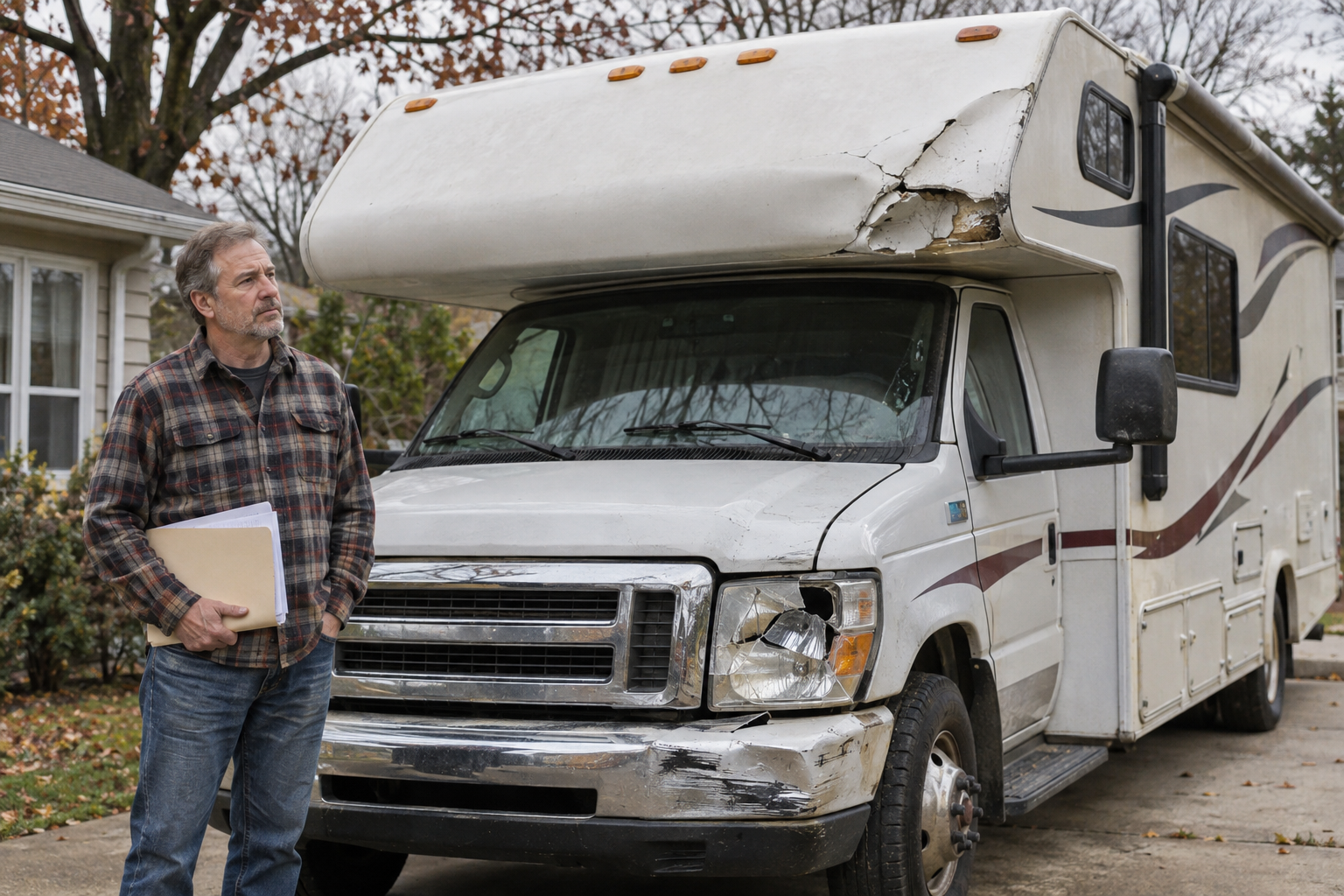
Your motorhome took a hit. Maybe it was a highway fender-bender, a backing mishap that crunched the rear cap, or a storm that left water sitting where it never should. Now you want it gone, and you’re staring at a problem most owners never plan for: how do you sell a motorhome that’s been in an accident without getting buried in questions, lowball offers, and legal worry?
Here’s the honest version nobody tells you up front. The accident itself isn’t the hard part. The hard part is everything that comes after: deciding what you’re required to tell buyers, figuring out how much value the damage really cost you, and dealing with the way a branded title scares off almost everyone who looks at it. Private buyers get nervous. Banks won’t finance it. The whole thing drags.
This guide walks you through what actually matters when you sell a damaged or accident-history motorhome, from disclosure to title brands to the cleanest exit when you just want it sold. You’ll know your options by the end, not just your problems.
Do You Have to Disclose That Your Motorhome Was in an Accident?
The short answer is yes, and trying to dodge it is the fastest way to turn a sale into a lawsuit. Most states require you to disclose known material damage and any branded title when you sell a vehicle, and you can never actively misrepresent the condition if a buyer asks a direct question. Say the rear wall had water damage. Say the frame was repaired. Say the title reads rebuilt.
Now, the exact rules vary by state. Some states spell out written disclosure requirements in detail, others lean on general fraud and misrepresentation law, and a few require specific damage-disclosure language on the paperwork. Because of that, check your own state’s DMV guidance before you list anything. Don’t assume what was true for a friend two states over applies to you.
The practical move is boring and effective. Put the known issues in writing on the bill of sale, note the title brand plainly, and keep a signed copy for your records. That paper trail is your protection. A buyer who signs off on a disclosed accident can’t come back six months later claiming you hid it.
And here’s what a lot of sellers get wrong: disclosure isn’t just a legal chore, it’s a trust signal. A buyer who feels like you’re being straight with them is far more likely to follow through. The seller who tries to paper over a repaired collision is the one who ends up with canceled deals and a reputation problem on the local forums.
How an Accident or Branded Title Affects Your Motorhome’s Value
Two different things drive your number down after an accident, and it helps to separate them. The first is the physical damage and repair quality. The second is the title brand. They don’t always move together, but both pull in the same direction.
Physical damage is the obvious one. Cosmetic dents and a cracked front cap hurt less than structural, mechanical, or water damage. Flooding is especially brutal because it hides in wiring, flooring, and the subframe, and buyers know it keeps costing money long after the sale. A clean-title motorhome that was repaired well and documented carefully might only give up a modest slice of value.
The title brand is where the real drop happens. A salvage or rebuilt title commonly cuts 20 to 40 percent off what a comparable clean-title unit would bring, and heavily damaged units lose more. This isn’t a guess. Owners on RV forums say it over and over. One seller weighing a rebuilt-title purchase put it plainly when he said he was “more concerned about resale going forward,” and the replies confirmed his fear: anything but a clean title reduces value in most cases, and a rebuilt title “very much counts as an issue.”
There’s a second hit that sneaks up on people. Insurance. Several owners report that insurers won’t write a policy, or won’t renew one, on a salvage or rebuilt-title RV. When a potential buyer finds out they might not be able to insure your motorhome, that’s often the moment the conversation ends. Fewer insurable buyers means a smaller pool, and a smaller pool means a lower price.
Selling Repaired vs. Still-Damaged: Which Route Makes Sense?
This is the question almost every accident seller wrestles with. Do you fix it first and sell it looking sharp, or sell it as-is and skip the repair bill? The instinct is to repair, because a clean-looking rig feels easier to sell. The math usually says otherwise.
Motorhome repairs are expensive, and you rarely recover the full cost at resale. Bodywork on a fiberglass front cap, slide-out mechanisms, delamination, frame straightening, water-damage remediation, these jobs run into real money fast. If the title is already branded, you’re pouring cash into a unit that will still sell at a branded-title discount no matter how nice it looks. That’s spending two dollars to recover one.
Cosmetic touch-ups on a clean-title motorhome can be worth it when they’re cheap and they help the unit photograph well. A detail, a buffed scuff, a replaced trim piece. That’s different from chasing structural or mechanical repairs you hope a buyer will reward. One salvage-title buyer on an Airstream forum summed up the repair gamble well: he comes out fine on resale only when the work is done right and the purchase price was discounted enough to cover it. For most private sellers, that margin doesn’t exist.
So weigh it like this. Minor cosmetic fix on a clean title, maybe. Big repair on a branded or heavily damaged unit, usually not. When the repair bill climbs past the value it adds, selling as-is to a cash buyer is the move that keeps money in your pocket instead of the body shop’s.
Salvage, Rebuilt, and Branded Titles: What Buyers Actually See
These terms get thrown around loosely, so let’s be precise, because the title in your hand decides who will even talk to you.
- Clean title: No brand. The motorhome has not been declared a total loss. This is what every buyer wants and what you no longer have if an insurer totaled it.
- Salvage title: Issued when an insurer declares the unit a total loss, usually because repair costs exceeded a set percentage of its value. A salvage-titled motorhome typically can’t be legally driven until it’s repaired and re-inspected.
- Rebuilt or reconstructed title: A salvage unit that was repaired and passed a state inspection, making it road-legal again. It’s drivable and sellable, but the brand stays.
Here’s the part sellers most want to be untrue: a title brand is permanent. Once a motorhome is branded salvage or rebuilt, that mark follows it to every future owner. Repairing it can upgrade salvage to rebuilt so it’s legal to drive, but it never becomes clean again. Buyers see the brand the moment they run the VIN, so there’s no point hoping it won’t come up.
That permanence is exactly why the private market gets thin for these units. Financing dries up because many lenders won’t touch a branded title. Insurance gets complicated. Cautious buyers simply pass. The owners left standing are cash buyers who understand branded titles and price accordingly, which is a much shorter list than you’d hope when you’re trying to sell on your own.
Why an As-Is Cash Buyer Is Often the Cleanest Route
When you add it all up, selling an accident motorhome privately is a grind. You disclose the damage, half your prospects vanish. The ones who stay want financing a bank won’t give them, or they can’t insure it, or they lowball you because they know you’re stuck. Weeks pass. The rig sits. You answer the same nervous questions again and again.
A direct as-is cash buyer skips all of that, and it’s built for exactly this situation. At RV Buyers USA, we buy motorhomes (Class A, B, and C) in any condition, including accident history, collision damage, water or flood damage, branded titles, and units that won’t run. As-is means as-is. You don’t fix anything, clean anything, or pretend the damage isn’t there. The damage is the whole reason the call is easy.
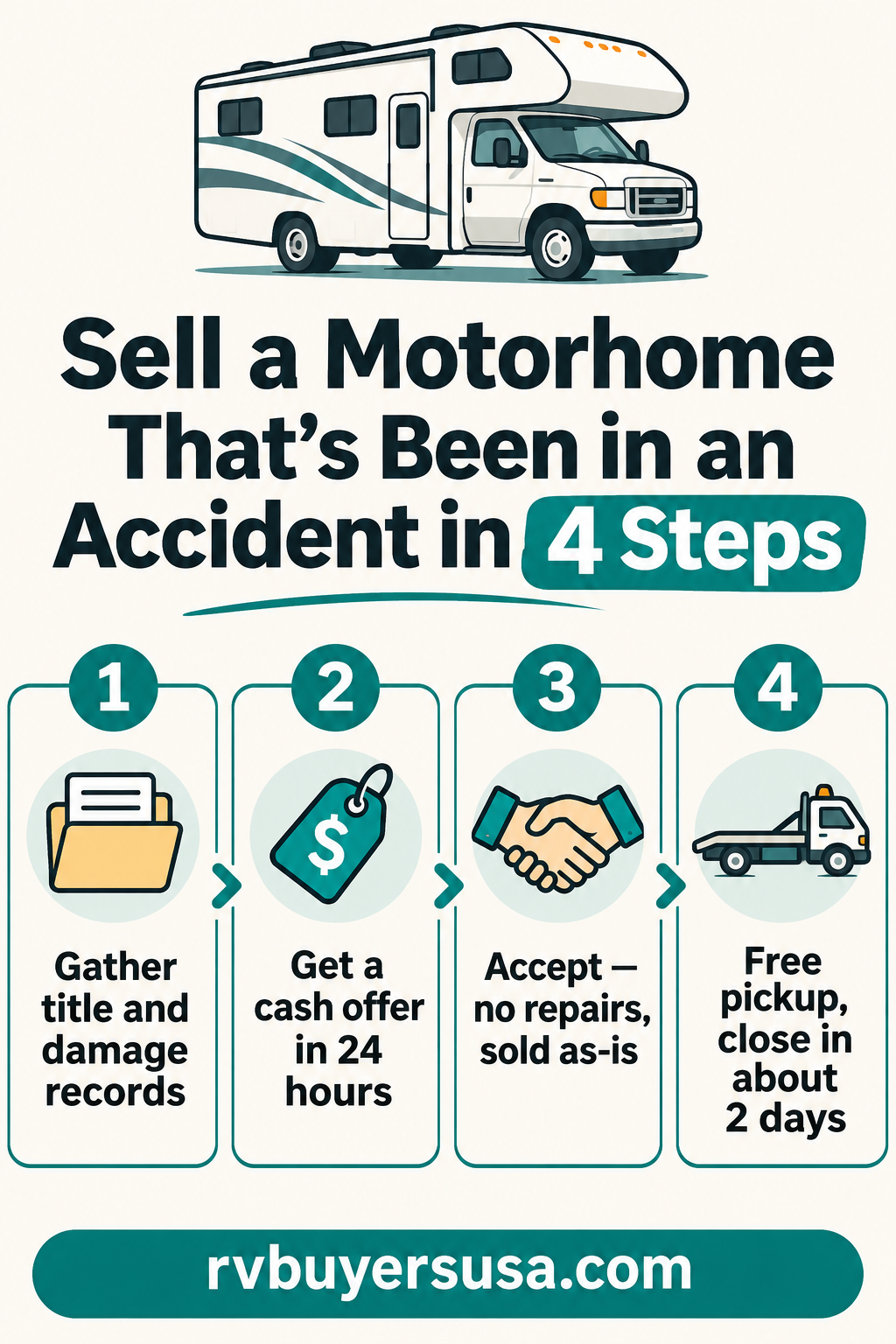
The process is short on purpose. You tell us about the motorhome and its history, you get a cash offer within 24 hours, and if you accept, closing usually happens in about two days. We come to you anywhere in the contiguous 48 states, handle the DMV paperwork and title transfer, and tow the unit at no cost to you. If you still owe money on it, we can pay off the loan as part of the deal. No dealer markup, no listing fees, no commission.
One thing worth saying plainly: we buy motorhomes only, and we focus on units that are 2016 or newer. We don’t buy travel trailers, fifth wheels, pop-ups, or any other towable. If you’ve got a drivable motorhome with an accident in its past, though, that’s squarely what we do, and the branded title or the dent in the front cap doesn’t scare us off.
Frequently Asked Questions
Do you have to disclose that your motorhome was in an accident?
In most states you have to disclose known material damage and any branded title, and you can’t misrepresent the motorhome’s condition if a buyer asks. The exact wording of disclosure laws varies by state, so check your state’s DMV rules. The safe rule is simple: tell the truth, put it in writing on the bill of sale, and keep copies. Honest disclosure protects you from a fraud or misrepresentation claim later.
How much does an accident or branded title lower a motorhome’s value?
It depends on the damage and the title. A repaired unit with a clean title and good records may lose only a modest slice of value, while a salvage or rebuilt title commonly knocks 20 to 40 percent off a comparable clean-title price, and sometimes more. Owners on RV forums consistently report that anything other than a clean title reduces resale value and shrinks the buyer pool. The bigger the structural or water damage, the steeper the discount.
Can you sell a motorhome with a salvage or rebuilt title?
Yes, you can legally sell a motorhome with a salvage or rebuilt title as long as you disclose the title brand to the buyer. The challenge isn’t legality, it’s finding a buyer. Many private buyers walk away once they see the brand, and banks often won’t finance a branded-title RV, so you’re usually left with cash buyers. A professional as-is cash buyer purchases branded-title motorhomes directly.
Should I repair the motorhome before selling it or sell it as-is?
Usually you shouldn’t pour money into repairs just to sell. Motorhome repairs are expensive, and you rarely recover the full cost at resale, especially if the title is already branded. Fixing cosmetic damage can help a clean-title unit show better, but structural or mechanical repairs often cost more than the value they add. Selling as-is to a cash buyer skips the repair bill entirely.
Will buyers still buy a motorhome that’s been in an accident?
Some will, but the pool is smaller and the process is slower. Private buyers often hesitate, lowball, or back out once they learn about the accident or a branded title, and insurability questions scare many of them off. Priced right and documented well, a repaired unit can still sell. An as-is cash buyer removes the guesswork because buying accident and damage history is what they do every day.
Does a branded title stay on the motorhome after it’s repaired?
Yes. Once a title is branded salvage, rebuilt, or reconstructed, that brand follows the motorhome permanently and carries over to every future owner. Repairing the unit and passing a state inspection can move it from salvage to rebuilt status so it’s road-legal again, but it never returns to a clean title. That permanent mark is a big reason branded-title motorhomes sell for less.
How do I sell a motorhome that was flooded or won’t run after a wreck?
Sell it as-is to a buyer who handles non-running and flood-damaged units. Flood and water damage can ruin wiring, flooring, and the subframe in ways that are expensive to chase down, so most private buyers avoid these units entirely. An as-is cash buyer will make an offer on a motorhome that won’t start, has water or mold damage, or isn’t drivable, and arrange pickup so you don’t have to move it.
Ready to Sell Your Accident Motorhome? Get a Cash Offer in 24 Hours
Stop re-listing a damaged motorhome nobody will finance. Call RV Buyers USA at +1-619-993-1439 or send your details and a few photos to info@rvbuyersusa.com, and you’ll have a fair, no-obligation cash offer within 24 hours. Tell us the year, the condition, and the accident history up front, damage and all. If you accept, we handle the title and DMV paperwork, pay off any remaining loan, tow it free anywhere in the contiguous 48 states, and close in about two days. Accident, branded title, or won’t-run, we buy motorhomes as-is so you can be done this week.