
The question comes up with almost every RV seller at some point: should I put money into repairs before I list, or just sell the thing as-is and let the price reflect the condition?
The instinct to fix everything before selling is understandable. You want the unit to look its best. You don’t want buyers to lowball you because they can see a problem. But the math on repairs doesn’t always work the way people expect, and it’s easy to spend $3,000 fixing things that add $1,500 to your sale price.
The right answer depends on the type of repair, the type of buyer you’re trying to attract, and how much time and money you can actually put into the unit before you sell. This post breaks down what’s worth fixing, what to leave alone, and when selling as-is is not just acceptable but the smart move.
The Math Problem With Repairs
Here’s the uncomfortable truth about RV repairs before a sale: most of them don’t pay for themselves.
When you spend money repairing an RV before selling it, you’re betting that buyers will pay more for the repaired unit than you spent fixing it. Sometimes that bet is right. Often it isn’t — especially when the repair is something buyers can’t easily see or verify during a showing.
Take a roof replacement. A new roof on a mid-size travel trailer might cost $4,000 to $6,000. Buyers shopping in your price range may not pay $4,000 more for a new roof than they’d pay for a unit with an older-but-currently-sound roof. They might pay $1,500 more. You’ve absorbed a loss on a repair that made the unit safer and more durable but didn’t recover its cost in the sale price.
The repairs that do recover their cost are generally low-cost, high-visibility fixes that affect how buyers feel when they first walk up to or step inside the unit. First impressions matter more in an RV sale than most sellers realize.
The Repairs Worth Making
These are the fixes that tend to produce a real return:
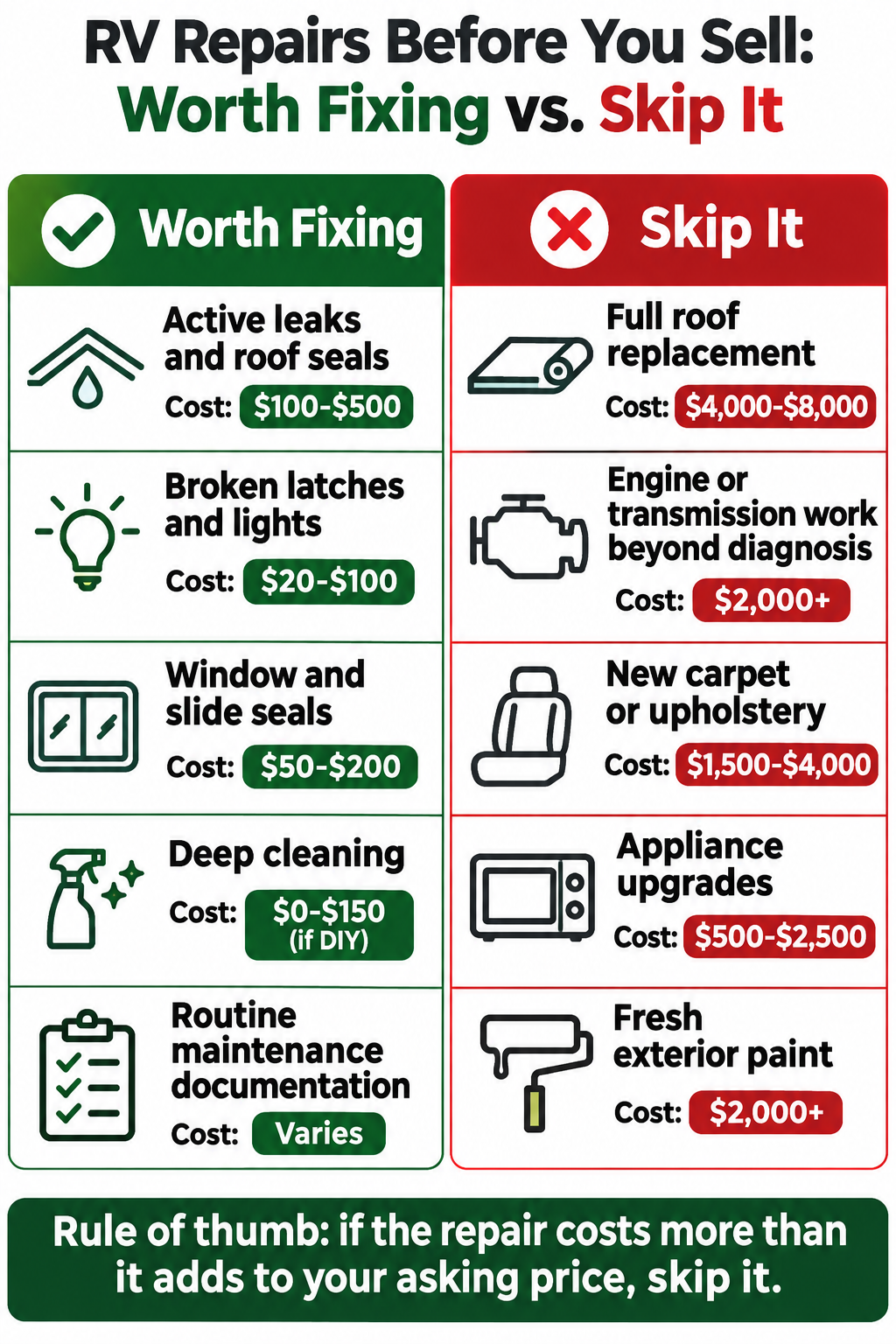
Fix active leaks and reseal the roof. Water damage is the single biggest red flag in any RV inspection. An active leak signals potential mold, structural damage, and delamination — all of which kill deals and dramatically drop offers. Resealing caulk and roof seams is relatively inexpensive (often under $500 if you DIY) and removes the biggest objection buyers have.
Replace worn seals around windows, doors, and slides. Worn seals suggest water is getting in places it shouldn’t. Fresh seals signal maintenance. This is the kind of low-cost detail that experienced buyers notice and factor into their confidence in the unit.
Fix broken latches, handles, and lights. Broken cabinet latches, a stuck entry door handle, a dead exterior light — these are cheap to fix and look bad to buyers who notice them. They’re the kind of thing that makes a buyer wonder what else hasn’t been taken care of.
Repair obvious cosmetic damage where it’s inexpensive. A scuffed wall panel that can be replaced for $50 is worth doing. Deep reupholstering or carpet replacement is probably not — those are high-cost improvements that buyers factor in at partial value.
Do all routine maintenance you have documentation for. A completed oil change, fresh tire sealant, new wiper blades, a checked brake system. These don’t need to be visible — having the service records is the point. Documented maintenance history adds buyer confidence and protects your asking price during negotiation.
The Repairs Not Worth Making
These are the fixes sellers commonly make that rarely recover their cost:
Major mechanical work on motorhomes. Engine and transmission repairs are expensive, and buyers shopping in the used motorhome market factor in mechanical age and risk regardless of what you’ve recently fixed. A fresh engine rebuild may increase buyer confidence, but it rarely adds the repair cost to the sale price.
Full interior renovations. New carpet, reupholstered furniture, fresh kitchen flooring — these make the unit feel newer, but buyers do their own math. If the exterior shows the age, the price is going to reflect the age regardless of what’s new inside. Save the renovation budget.
Appliance replacement for older units. Replacing a 12-year-old refrigerator with a new residential unit in an older coach rarely adds the cost of the appliance to the asking price. Buyers expect older units to have older appliances.
Cosmetic exterior work beyond basic cleaning. Fresh paint on an RV is expensive and doesn’t move private sale prices proportionally. Wash it, wax it, clean the awning — but don’t pay for a paint job you won’t recover.
When Selling As-Is Is the Right Call
If the repairs needed on your unit are significant and expensive, selling as-is is often the most financially sound choice. Price the unit to reflect its condition honestly, disclose the known issues clearly, and let buyers factor that into their offer.
A private buyer who knows exactly what they’re buying — and priced accordingly — is a faster, cleaner transaction than a private buyer who finds problems during inspection that you didn’t disclose.
For sellers with units in rough condition, a cash buyer is often the best fit. Cash buyers purchase units with mechanical issues, deferred maintenance, cosmetic damage, and age-related wear. They factor condition into their offer rather than requiring you to repair the unit before they’ll buy it. You don’t have to invest money into a rig you’re selling.
The Non-Negotiable: Cleaning
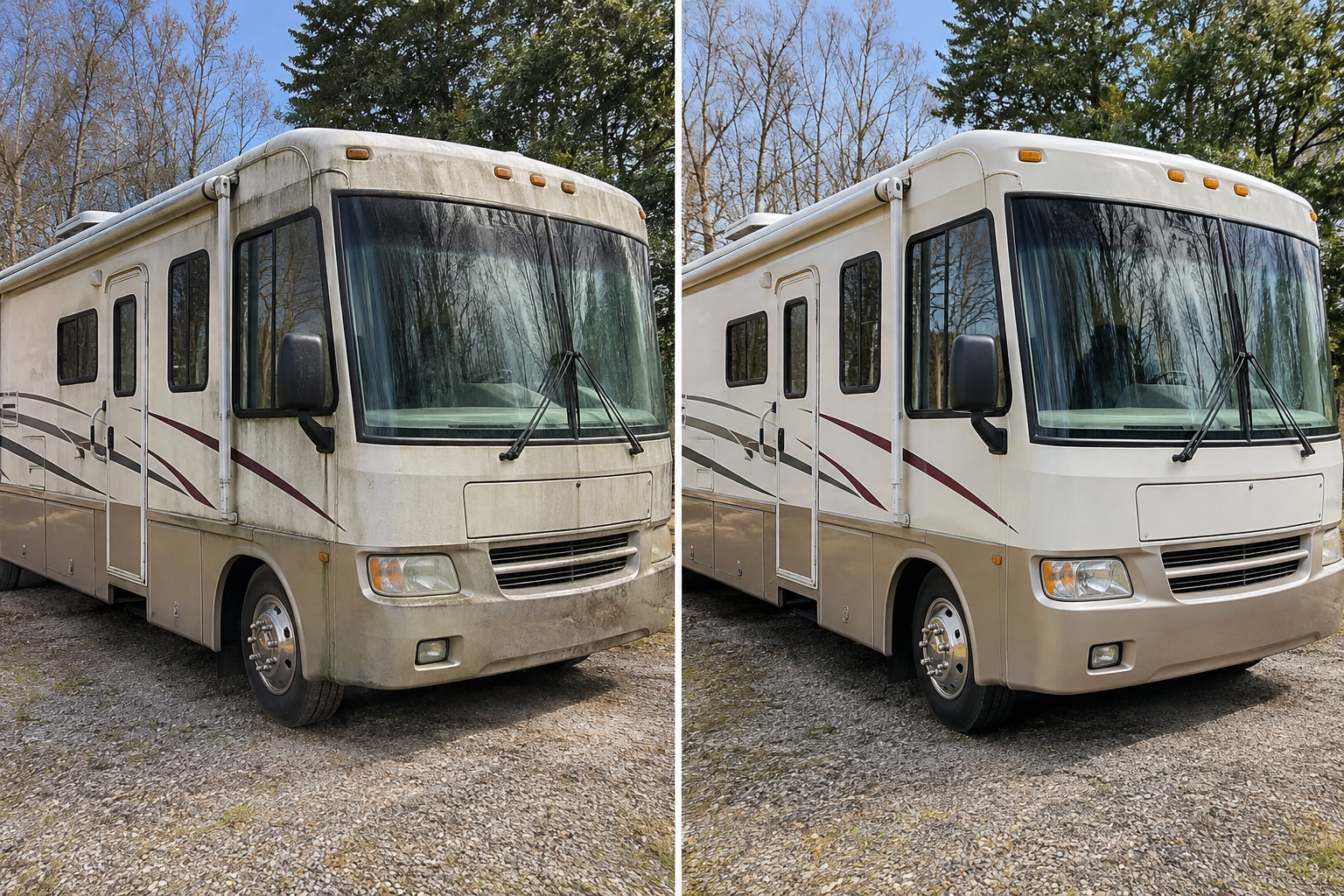
Whatever else you decide to fix or not fix, clean the unit. A dirty RV photographs poorly, shows poorly, and creates the impression that it hasn’t been cared for — regardless of whether it actually has been. Clean costs almost nothing relative to what it communicates to a buyer.
Pull everything personal out. Deep clean the interior: floors, walls, appliances, cabinets. Wash the exterior. Clean the awning. Wipe down the hitch and storage compartments. This one task does more to protect your asking price than almost any repair you could make.
Frequently Asked Questions
Should I repair my RV before selling it?
It depends on the repair. Low-cost fixes that directly affect the buyer’s first impression — cleaning, sealing, replacing burned-out lights, touching up obvious cosmetic damage — are usually worth doing. Major mechanical repairs or full interior renovations rarely recover their cost in the sale price. The general rule: fix what’s cheap and visible, disclose what’s expensive.
Will a cash buyer take an RV with problems?
Yes. Cash buyers regularly purchase RVs with mechanical issues, cosmetic damage, and deferred maintenance. They factor the condition into their offer price rather than requiring repairs before closing. This is one of the main advantages of the cash buyer route — you don’t have to spend money on repairs to get the unit sold.
What repairs actually increase RV sale price?
The repairs most likely to move the sale price are those that buyers notice immediately and that signal bigger problems if ignored. Fixing active leaks, resealing the roof and windows, replacing worn seals around slides, repairing broken latches, and cleaning the unit thoroughly all tend to produce the best return. These are low-cost and high-visibility fixes.
How do I clean my RV before selling it?
Start with the exterior: wash the roof, sides, and undercarriage. Clean or replace caulk and seals. Move inside and remove all personal items, then deep clean every surface including inside cabinets and appliances. Shampoo the carpet or clean the flooring. Wipe down walls, windows, and blinds. A clean RV photographs better, shows better, and signals to buyers that the unit has been cared for.
Does a damaged RV affect its value significantly?
Yes, but the type of damage matters more than the presence of damage. Water damage and structural issues are the most serious value killers. Cosmetic damage — faded paint, worn upholstery, small dents — has a real but smaller impact. A buyer for a damaged unit exists; the price just has to reflect the condition honestly. Hiding damage and having it discovered during inspection damages trust and kills deals.
If your RV needs more work than it’s worth investing in, RV Buyers USA buys units in any condition — no repairs required. Get a cash offer based on what your unit is worth as-is, and skip the time and expense of pre-sale repairs that may not pay off. Reach out today for a no-obligation quote.