
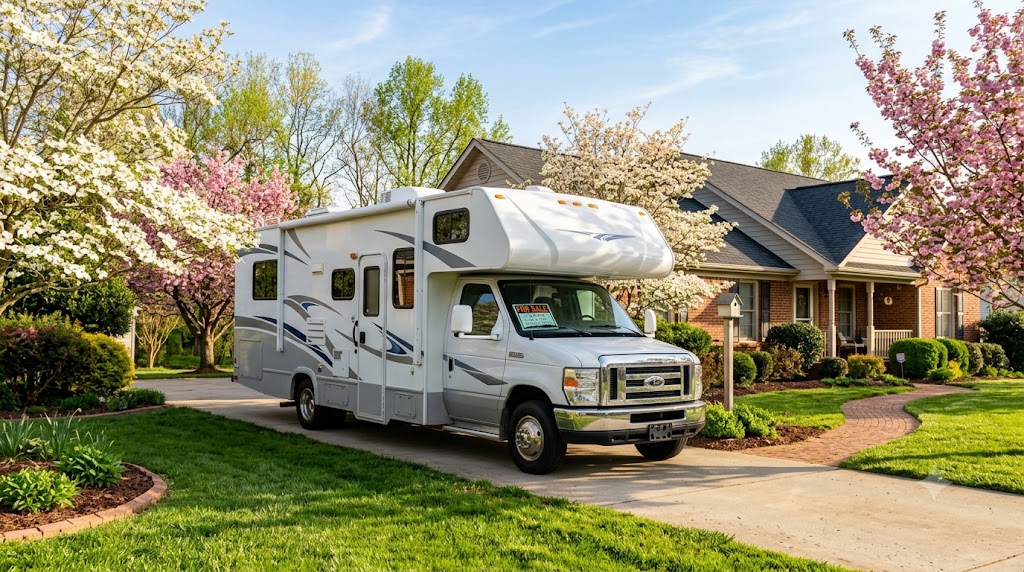
Ask ten RV owners when to sell and most will say the same thing: wait for spring. They are not wrong, exactly. Spring really is when the most buyers show up with the most money. But that advice leaves out the part that actually decides how much you walk away with, which is what it costs you to wait.
The RV market moves with the seasons in a predictable rhythm. Demand swells before summer, cools after Labor Day, and goes quiet through the holidays. If you are selling privately, riding that wave can mean a faster sale and a stronger price.
The trouble is that timing is only one lever, and it is not the biggest one. Below is how each season actually plays out for sellers in 2026, where the conventional wisdom holds, and how to know when waiting for the perfect window is costing you more than it is earning.
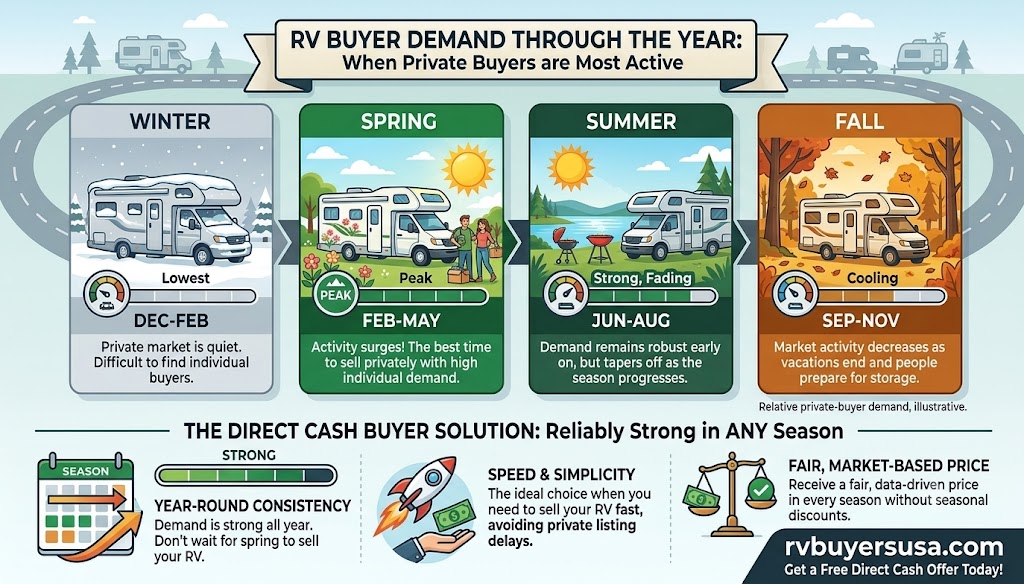
Spring: The Seller’s Peak Season
If demand were a thermometer, spring is when it climbs fastest. From roughly February through May, buyers are mapping out summer trips, tax refunds are landing, and the urge to be on the road by Memorial Day is real. More shoppers means more competition for good rigs, and that pushes private-sale prices up.
This is the window where a clean, well-maintained RV moves quickly. Listings get more views, more serious inquiries, and fewer drawn-out negotiations because buyers feel a deadline. They want to camp this summer, not next.
If you are committed to a private sale and your RV is in strong shape, spring is the season to aim for. List early, before the rush peaks, so you are in front of buyers while they are still deciding rather than after they have already bought.
Summer: Strong Early, Soft Late
Summer starts hot and fades. June still carries spring momentum, and plenty of buyers who waited too long are now scrambling to grab a rig before their vacation. That urgency can work in your favor.
By late July and August, the tone shifts. The people who wanted to camp this season mostly already have a rig. The remaining buyers know the prime months are slipping away, so they negotiate harder and feel less pressure to close. Prices soften even though the weather is still perfect.
There is one more wrinkle. Summer is when current owners are actually using their RVs, which means fewer of them are listing. Lower supply can prop up prices a bit, but the shrinking buyer pool usually matters more as the season winds down.
Fall and Winter: The Slow Season (With Exceptions)
Once Labor Day passes, the private market cools fast. Kids are back in school, the camping itch fades with the temperature, and buyers who do appear know they have leverage. Rigs listed in October and November tend to sit, and the offers that come in reflect a buyer’s market.
Winter is the deepest trough. Through December and January, much of the country is not thinking about RVs at all, and a private listing can languish for months while you keep paying to store and insure it.
Two exceptions matter. First, geography. In the warm-weather Sun Belt, places like Arizona, Florida, and Southern California, snowbirds and year-round RVers keep demand alive through winter. Second, buyer type. A direct cash buyer does not care what month it is, because the offer is based on current market data, not foot traffic. That makes a cash sale one of the smartest moves you can make in the off-season, when private demand evaporates.
Why Timing Is Not the Whole Story
Here is what the wait-for-spring crowd misses. An RV is a depreciating asset, and the clock never stops. Every month you hold it waiting for a better window, the value keeps sliding and the bills keep coming.
Add up what holding really costs. Insurance runs every month whether you drive it or not. Storage fees, if you pay them, do the same. Routine maintenance, registration, and the slow march of depreciation all chip away at your eventual sale price. RVs lose value fastest in their early years, so a newer rig sitting in storage is bleeding value at exactly the wrong time.
Now weigh that against the seasonal bump. If waiting four months from winter to spring nets you a few percent more on the sale price, but four months of carrying costs plus continued depreciation eats up that gain and then some, you have not won anything. You have just paid to delay.
The honest version of the timing question is not “when does the market peak?” It is “does the price I might gain by waiting beat the cost of holding the RV that long?” For a lot of owners, especially those with a newer rig or high monthly carrying costs, the answer is no.
How to Decide What to Do Right Now
You can settle this without guessing. Walk through these questions honestly.
- What shape is the RV in? A clean, well-kept rig benefits most from peak season. A tired or higher-mileage one will not magically command spring prices just because it is spring.
- What does each month of waiting cost you? Add insurance, storage, maintenance, and a realistic depreciation estimate. That is your monthly cost to hold.
- Do you actually need the money or space now? If the RV is sitting unused and you would rather have the cash, the seasonal argument for waiting gets weak fast.
- What is your tolerance for the selling process? Peak season still means showings, tire-kickers, and weeks or months on market for a private sale.
If your RV is in great shape, your carrying costs are low, and you genuinely enjoy managing a private sale, listing in spring is a reasonable play. If any of those are not true, getting a free cash offer now will tell you exactly what your rig is worth today, before another month of depreciation and storage fees quietly shrinks the number.
Frequently Asked Questions
What is the best time of year to sell an RV?
Late winter through spring, roughly February to May, is the best time to sell an RV. Buyers are planning summer trips and shopping hard, so demand and private-sale prices peak. If you want the strongest market, list before the camping season starts rather than after it ends.
Is it a bad idea to sell an RV in winter?
Selling privately in winter is harder because fewer buyers are looking, so rigs sit longer and offers come in lower. The exception is the warm-weather Sun Belt, where demand stays steadier year-round. A direct cash buyer also pays a fair, market-based price in any season, which makes winter timing far less of a penalty.
How much does timing affect an RV’s resale price?
Season can swing a private RV’s sale price and time on market by a meaningful amount, often several percent and weeks or months of waiting. Condition, mileage, model demand, and overall depreciation usually move the number more than the calendar does, so timing helps but it does not override the fundamentals.
Should I wait for spring to sell my RV?
Only if your RV is in good shape and you can afford to hold it. Every month you wait, the RV keeps depreciating and you keep paying insurance, storage, and maintenance. If those carrying costs outrun the seasonal price bump, selling now to a cash buyer can net you more than waiting for spring.
Does selling to a cash buyer depend on the season?
No. A direct cash buyer like RV Buyers USA makes offers based on current market data and recent sales, not on whether it is peak season in your area. That is why a cash sale is a strong option in fall and winter, when private buyers thin out and listings stall.
When do RVs depreciate the most?
RVs lose value fastest in the first few years of ownership, with many dropping a large share of their value early on. Depreciation runs continuously regardless of season, which is why holding an RV for months just to hit a better selling window can quietly cost you more than the timing gains.
Find Out What Your RV Is Worth Today
You do not have to bet on the calendar. Get a free, no-obligation cash offer from RV Buyers USA and see exactly what your rig is worth right now, in any season. The appraisal takes about two minutes, your offer arrives within 24 hours, and if you accept, they come to you anywhere in the contiguous 48 states and handle all the paperwork. Request your free RV appraisal today and decide with a real number in hand instead of a guess about spring.